

East Asian Studies
The Graduate School of East Asian Studies provides students with double expertise, an excellent level in an oriental language (Chinese, Korean, Japanese or Vietnamese) and in the human and social sciences. The training is resolutely multidisciplinary, but students have to choose a primary disciplinary orientation among three: Letters, Philosophy and Arts; Linguistics and Didactics; or History, Societies and Territories.


Presentation
The Gradute School of East Asian Studies trains high-level international students. At the end of the two (or three) years program (in the case of an extended stay abroad), they have an excellent command of an oriental language (Chinese, Korean, Japanese or Vietnamese). They are familiar with the latest developments in research in the humanities and social sciences in their area of specialisation.
The courses are taught in French, English and Oriental languages, and students are expected to spend time in their country of specialisation.
The skills acquired ensure that students have a variety of opportunities in the labour market and, for those who wish, the possibility of pursuing a career in research through doctoral training. The disciplines practised within the programme are varied: classical text studies, literary studies, linguistics, ancient, modern and contemporary history, sociology, anthropology, and political science.
Since septembre 2021, several initiatives are being taken to strengthen the international dimension of the Graduate School of East Asian Studies:
- Several social sciences master seminars are taught in English;
- A cycle of lectures is given by visiting foreign professors;
- Cross-curricular training enriches master courses, including a seminar on publications and careers in the English-speaking world.
Website
Department of East Asian Languages and Civilizations
Contact
Ken DAIMARU
ken.daimaru@u-paris.fr
Prof. Gilles GUIHEUX
gilles.guiheux@u-paris.fr
Adress
UFR LCAO
Grands Moulins
5 rue Thomas Mann
75013, Paris
Masters
LLCER – Foreign and regional languages, literatures and civilisations:
Research
Each faculty member speaks at least one Asian language – Chinese, Korean, Japanese or Vietnamese – and specialises in one discipline such as literary studies, classical studies, linguistics, ancient, modern and contemporary history, sociology, anthropology or political science. Research is conducted in research centres associated with national organisations (CNRS, IRD), in collaboration with other higher education and research institutions (INALCO, Collège de France, Ecole Pratique des Hautes Etudes, EHESS).
Executives
The Graduate School of East Asian Studies is co-directed by Ken DAIMARU and Gilles GUIHEUX, in coordination with a steering committee composed of the director of the LCAO department, the president of the scientific council of the department, the persons in charge of the four master degrees involved, and representatives of the four sections (China, Korea, Japan, Vietnam).
- Ken DAIMARU
Senior lecturer
Japanese History
East Asian Civilizations Research Centre (CRCAO) - Prof. Gilles GUIHEUX
Professor, sociology of China
Member of Centre d’études en sciences sociales sur les mondes africains, américains et asiatiques (CESSMA)
À lire aussi

Le réseau The Guild fête ses 10 ans et élit Laëtitia Atlani-Duault, Vice-présidente Europe, au sein de son Conseil d’Administration
Le réseau The Guild of European Research-Intensive Universities, dont l'Université Paris Cité est membre, s'impose depuis dix ans comme un acteur incontournable pour la défense d’une recherche d’excellence, libre et à fort impact sociétal. Alors que le réseau célèbre...
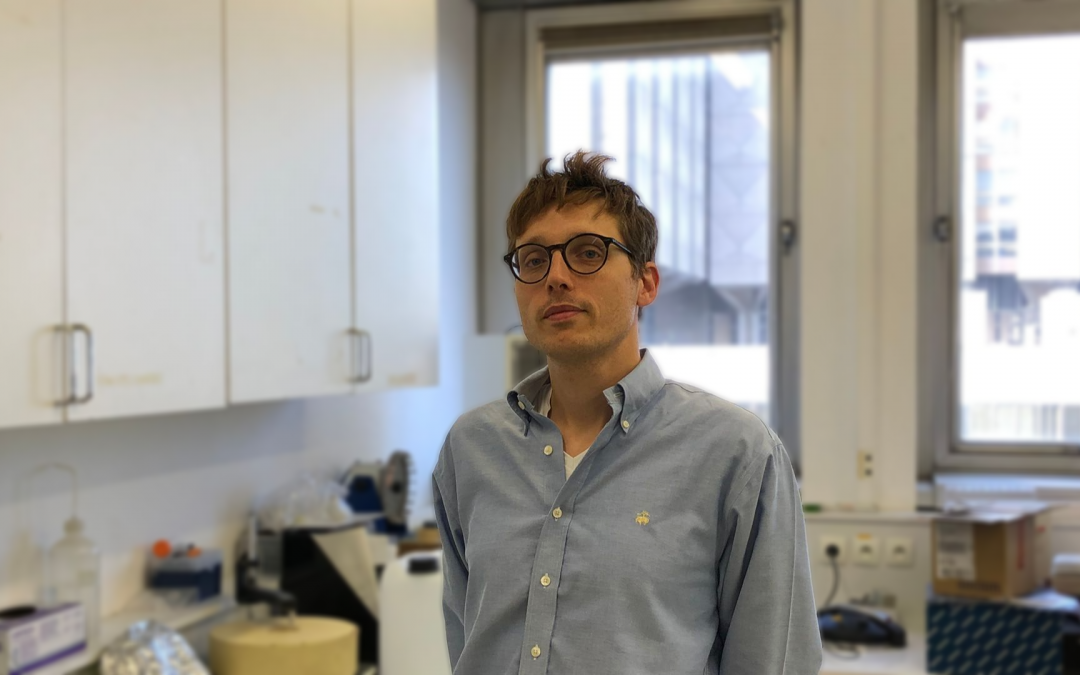
Un prestigieux financement ERC Starting Grants accordé à Infibrosis, un projet qui étudie la maladie rénale chronique
Le projet Infibrosis, lauréat d’une prestigieuse ERC Starting Grants 2026, porté par Camille Cohen, médecin chercheur en néphrologie à l’Université Paris Cité au Centre de Recherche sur l’inflammation*, contribuera à améliorer les connaissances sur la maladie rénale...
Les Erasmus Days : Découvrez le programme de l’édition 2026 !
Du 12 au 16 octobre 2026, l’Université Paris Cité fête les Erasmus Days à nouveaux ! Conférences sur les mobilités internationales, escape game, théâtre, soirée internationale... découvrez toute la programmation de l'édition 2026. [iframe...
Erasmus Days: Discover the 2026 Programme!
From October 12 to 16, 2026, Université Paris Cité is celebrating the Erasmus Days once again! Conferences on international mobility, an escape game, theatre, an international evening… Discover the full programme for the 2026 edition. [iframe...