


Innovative Materials
The Graduate School of Innovative Materials aims to train students in the fields of soft condensed matter and materials science. This training allows students to image and explore new ways of designing new materials and understanding complex systems to meet the challenges of tomorrow.
Presentation
To order to meet future challenges in the fields of health and preservation of the planet, there is a growing need of research and training regarding innovative materials and complex systems to understanding future societal issues.
With this in mind, the Graduate School of Innovative Materials encourages students’ interest in the design of new materials. So that they can apprehend and understand the design of complex systems emerging from the current challenges of society. With a broad field of research on application (bioengineering, catalysis, optical devices, telecommunications, medicine, energy, information storage and reading), the Graduate School of Innovative Materials aims to train experts able to study the fundamental properties of these new materials interacting with their surrounding environment.
All these subjects benefit from new developments in modelling and simulation, as well as from the breakthrough of artificial intelligence in all fields of science. Through this interdisciplinary approach, the aim of the Graduate School of Innovative Materials is to train experts with a broad scientific background, fostering interactions between different disciplines: notably physics, chemistry, biology, geophysics and medicine, in order to make dramatic progress in understanding and meeting future needs.
Masters
List of Masters taught in French and English:
- Master of Physics
- Fundamental physics and applications:
- Earth and planetary sciences, environment:
- Engineering degree:
List of Masters taught in English:
- Fundamental physics and applications:
- Health engineering:
Research
The research topics of the Graduate School of Innovative Materials cover all aspects of materials science and include the following fields:
- Bio-materials, bio-material synthesis and bio-genetic materials
- Complex systems and soft matter
- Detection and metrology devices (meta-materials, quantum sensors, time-resolved IR/Raman spectroscopy and microscopy…)
- Interaction of materials with their environments (gaseous and liquid environments, natural environments…)
- Life cycle of materials in their environments, biological and environmental impact
- Materials eco-conception
- Materials for implants-prostheses
- Nano-materials for health and environment
- Nano-physics: nano-electronics, nano-photonics, nano-magnetism, nano-electromechanics…
- Surface science and nano-structures, new materials: oxides, alloys, composites, organic-inorgonic hybrids, nano-particles, bio-mineralisation, bio-inspired materials
The Graduate School of Innovative Materials offers students a cross-disciplinary training, in order to provide them with the best knowledge and skills:
- Interdisciplinary approaches with research teams working in physics, chemistry, earth and environmental sciences, biology and health;
- Knowledge and understanding of the societal impact with work ranging from fundamental research to practical applications;
- A strong involvement of start-ups, small and medium-sized enterprises, ensuring that students have a high level of pratical training;
- But also privileged access to advanced technology platforms using the latest instrumental developments.
Laboratories
- T3S – environmental Toxicity, Therapeutic Targets, cellular Signaling and Biomarkers (UMR 1124)
- CAP Paris Tech (UMR U 1275)
- IPGP – Institut de Physique du Globe de Paris (UMR 7154)
- ITODYS – Interfaces Traitements Organisation et Dynamique des Systèmes (UMR 7086)
- IVETh – The technological expertise platform for the production, engineering and characterisation of Extracellular Vesicles for personalised Therapies
- MPQ – Laboratoire Matériaux et Phénomènes Quantiques (UMR 7162)
- MSC-MED – Antenne Laboratoire Matière et Systèmes Complexes (UMR 7057)
- PCC – Physico-chimie Curie (UMR 168)
- PMMH – Physique et Mécanique des Milieux Hétérogènes (UMR 7636)
Executives
- Prof. Christian RICOLLEAU
Professor at Université Paris Cité
À lire aussi
Prix Jeunes Talents France L’Oréal-UNESCO Pour les Femmes et la Science : Appel à candidatures 2026
La Fondation L'Oréal, en partenariat avec la Commission nationale française pour l'UNESCO et l'Académie des sciences, déclare officiellement ouvert l'appel à candidatures de l'édition 2026 du Prix Jeunes Talents France L'Oréal-UNESCO Pour les Femmes et la Science :...
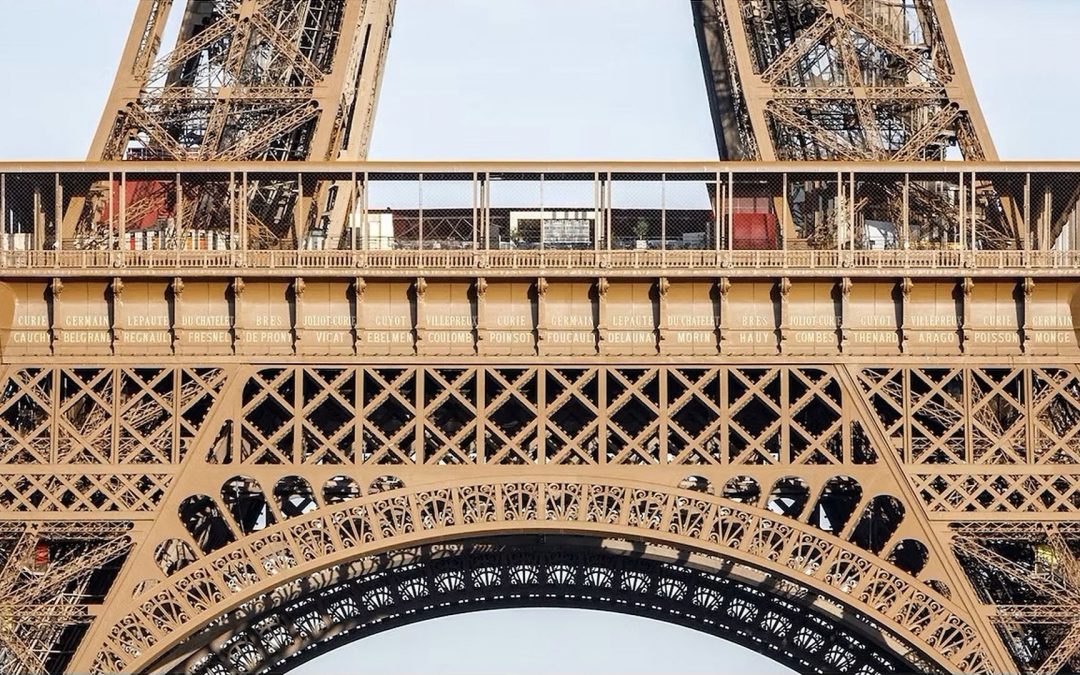
International Day of Women and Girls in Science: celebrating the women who push research forward
February 11 was the International Day of Women and Girls in Science. On this day, Université Paris Cité reaffirms its commitment to the equality between men and women and celebrates the journey of the women who advance research. Between celebrating our heritage and...

Suivi des maladies chroniques : un patient sur deux serait ouvert à la téléconsultation
L’étude REACTIVE, coordonnée par la Dre Tiphaine Lenfant et le Pr Viet-Thi Tran et menée par des équipes de médecine interne de l’hôpital européen Georges-Pompidou AP-HP, du centre d’épidémiologie clinique de l’hôpital Hôtel-Dieu AP-HP, de l’Université Paris Cité, de...
Journée internationale des femmes et des filles de science : célébrer celles qui font avancer la recherche
Le 11 février marque la Journée internationale des femmes et des filles de science. À cette occasion, l’Université Paris Cité réaffirme son engagement en faveur de l’égalité femmes-hommes et célèbre le parcours de celles qui font avancer la recherche. Entre un...