

As part of the Innovation Santé 2030 plan, the French National Research Agency (ANR) awarded fifteen Chaires d’Excellence to outstanding scientists to carry out ambitious biomedical projects in France. Among them, two lecturers-researchers at Université Paris Cité are awarded: Guillaume Canaud and Marc Lecuit.
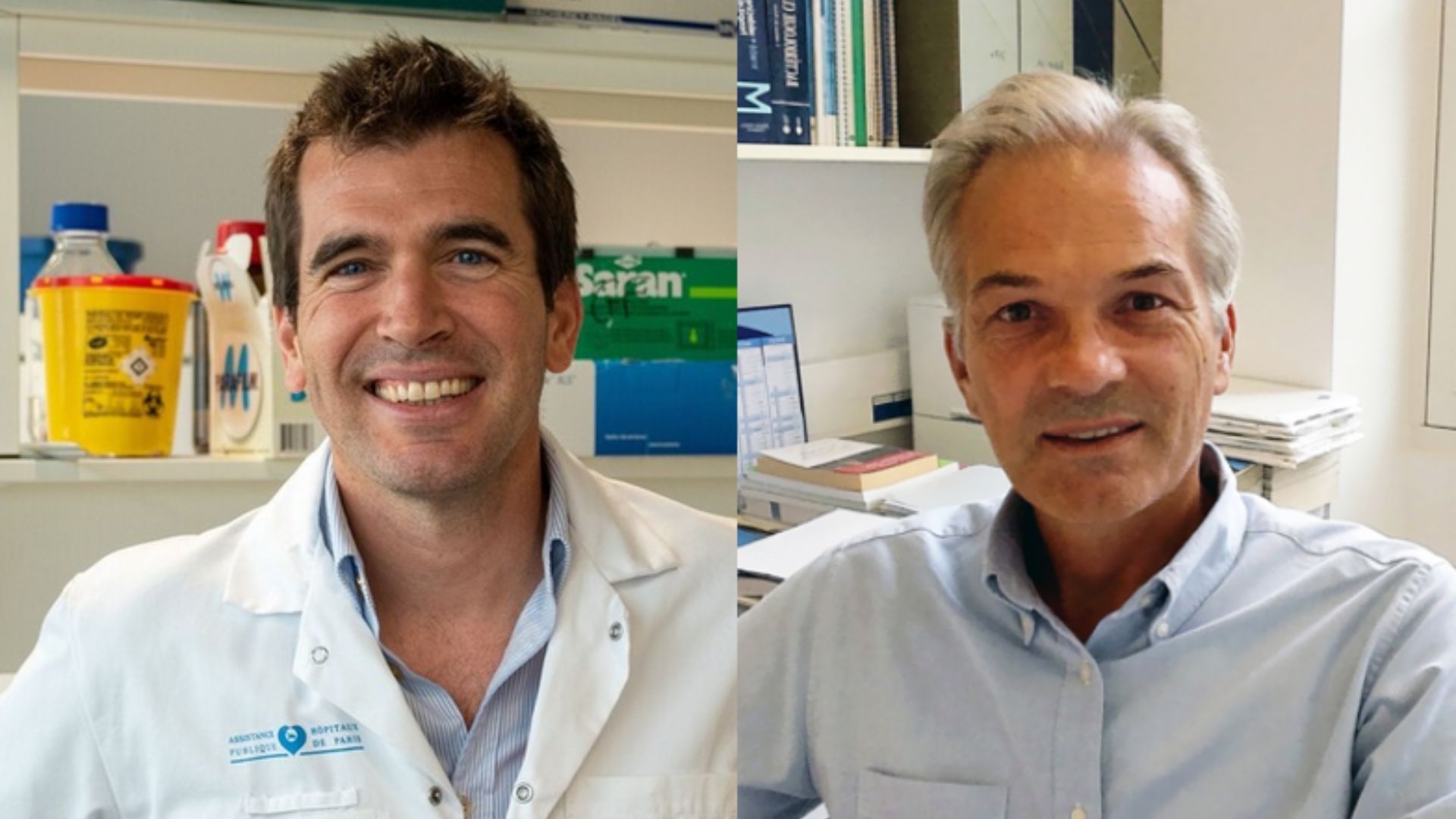
Guillaume Canaud (left)
Marc Lecuit (right)
Major support for excellence in biomedical research
Announced by the French government on 7 July 2025, the “Chaires d’Excellence in Biology and Health” aim to strengthen the appeal of French biomedical research. They are intended for leading researchers from all geographical backgrounds, offering funding from €2 to €5 million to lead new large-scale projects in France over a five-year period.
This initiative is part of the plan Innovation Santé 2030, which aims to make France a leader in public health research and innovation.
Université Paris Cité congratulates Guillaume Canaud, professor at Université Paris Cité, nephrologist at Necker-Enfants Malades hospital and prizewinner for his KRASY project, as well as Marc Lecuit, professor at Université Paris Cité, Head of the Biology of infectionsunit (Institut Pasteur/UPCité/Inserm), Deputy Head of the tropical and infectious diseases Department at Necker-Enfants Malades hospital, and prizewinner for his FIDELIO project.
Understanding and treating arteriovenous malformations linked to the KRAS gene
The Chaire d’Excellence awarded to Professor Guillaume Canaud supports the KRASY research project: “Targeted therapies for patients with vascular malformations caused by a somatic KRAS mutation”.
“The Chaire’s support is an important recognition for our team. It reflects strong confidence in our work. In the past, our research has already overcome similar challenges and helped increase the visibility of French research in this field.”, Professor Guillaume Canaud explains.
The KRASY project tackles arteriovenous malformations (AVMs) caused by genetic mutations, whether inherited or occurring sporadically during embryonic development. The mechanisms of apparition and progression of AVMs, caused by sporadic mutations in the KRAS gene, remain poorly characterised, and no approved treatment is currently available for these malformations.
“The KRASY project aims to understand the molecular mechanisms that increase the risk of developing arteriovenous malformations and provide ultra-targeted and personalised treatments. The preliminary data that made this financial support possible have shown that this approach is feasible, with a rapid transfer of fundamental discoveries to humans.”, Guillaume Canaud concludes.
Understanding infection progression in vivo
The Chaire d’Excellence awarded to Prof. Marc Lecuit supports the FIDELIO research project: “Infected cells in vivo: mechanisms and consequences”. With this project, Marc Lecuit aims to improve our understanding of bacterial infections by placing them in their biological environment, that of an infected living being.
Although cell microbiology has led to major developments, many grey areas still remain regarding how germs and infected cells behave in vivo. By using the Listeria bacterium as a model pathogen, FIDELIO aims to determine the dynamics and development of the bacterial population within the infected host, generate a map of the infected cells and characterise how these cells evolve over time and accross tissues during infection.
“The funding will be crucial for our project. It will enable us to describe microbial and cellular dynamics and fates during infection, and to identify their short and long-term effects.”, Prof. Marc Lecuit explains.
These findings, which underwent evaluation by an international jury of experts demonstrate the academic excellence of Université Paris Cité’s research teams. They also illustrate the government’s commitment to supporting ambitious projects led by researchers at the forefront of innovation.
Translated by MA translation students, Master’s in Language Industry and Specialised Translation, Université Paris Cité, 2026
À lire aussi
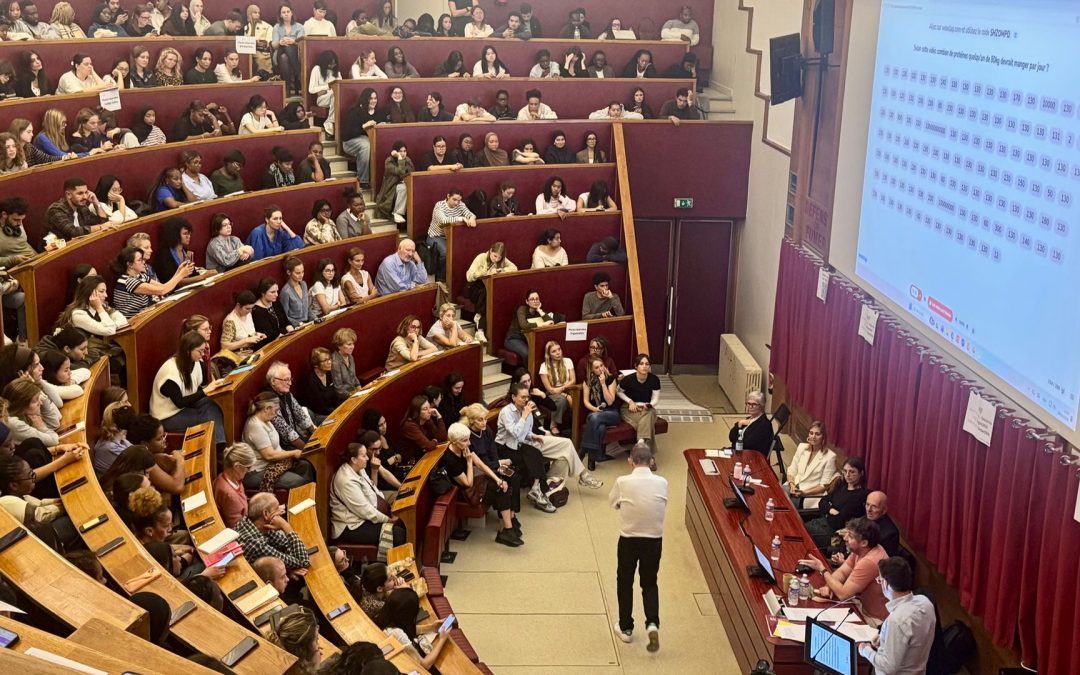
Le Grand Debunk de la Santé : une édition spéciale nutrition au plus près du public

Renforcer l’accès aux soins : la Région Île-de-France investit dans la formation des futurs infirmiers et inaugure un institut rénové au cœur de Paris
Valérie Pécresse, Présidente de la Région Île-de-France et Farida Adlani, Vice-présidente chargée des Solidarités, de la Santé et du Bien vieillir, ont inauguré ce lundi 12 octobre 2026, aux côtés de Nicolas Revel, Directeur général de l’Assistance Publique – Hôpitaux...
read more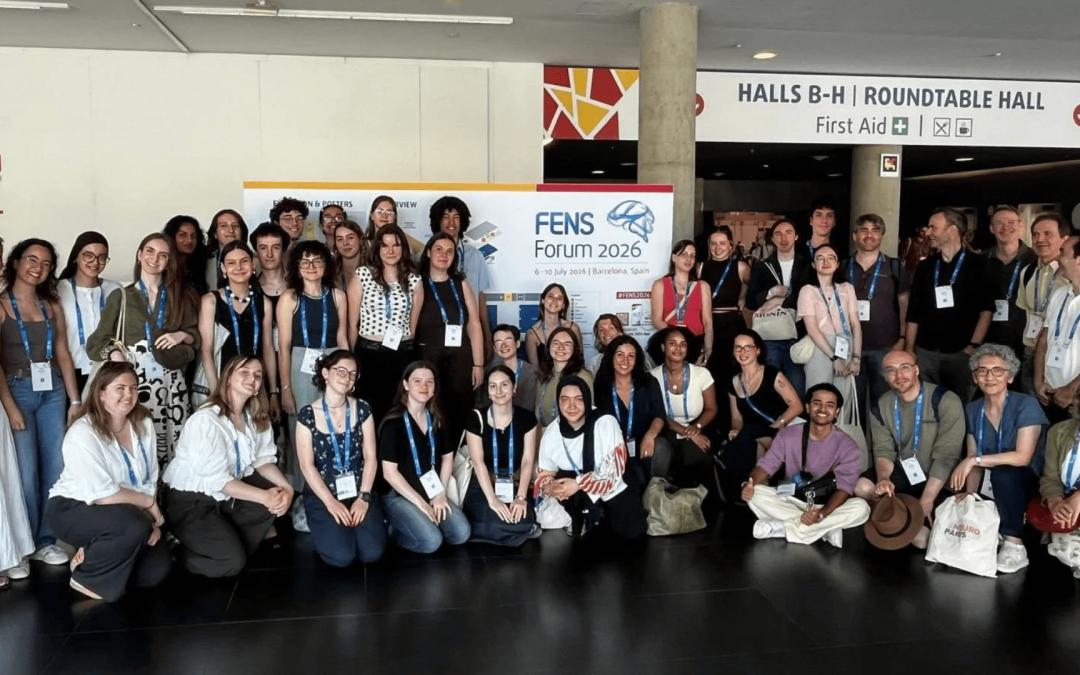
FENS 2026: Graduate School Neuroscience students at the heart of international research
This summer, 25 Master's students from Université Paris Cité's Neuroscience Graduate School attended the FENS (Federation of European Neuroscience Societies) Forum 2026 in Barcelona, Europe's leading neuroscience conference. This was a unique opportunity to immerse...
read more
FENS 2026 : les étudiantes et étudiants de la Graduate School Neuroscience au plus près de la recherche internationale
Cet été, 25 étudiantes et étudiants en master de la Graduate School Neuroscience de l’Université Paris Cité ont participé au FENS (Federation of European Neuroscience Societies) Forum 2026 à Barcelone, le grand rendez-vous européen des neurosciences. Une occasion...
read more