

Governance, Decisions, Transitions


Presentation
The Graduate School of Governance, Decisions, Transitions aims to offer innovative and interdisciplinary training programmes in collaboration with affiliated research centers and faculty members from the Faculty of Law, Economics, and Management. These programmes aim to teach practical skills, such as conducting research in law, economics, and management using methods and ethics that are taught and practiced together with students. They also aim to foster a sense of civic responsibility by educating citisens who are aware of the challenges posed by political, democratic, ecological, and technological transitions in our society.
Students will study changes in political regimes and international relations, new responsibilities imposed on businesses such as social responsibility and duty of vigilance, and the impacts of new technologies, particularly artificial intelligence, on human and institutional relationships.
With the support of five research centers and numerous faculty members from the Faculty of Law, Economics, and Management, the Graduate School of Governance, Decisions, Transitions promotes the teaching of these disciplines through seminars on research methodology and ethics, and develops innovative training programs on governing transitions.
Masters
Law masters
Master’s in business law:
- Banking, Finance and Fintech
- Business law
- European business law
- International business law
- Tax Business Law
- Law and Financial Wealth Management
Master’s in international law:
Master’s in notarial law:
Master’s in private law:
Master’s in public law:
Note: A dual master’s programmes in business law and economics will be launched from 2025. This programmes will include studies in business law, as well as banking, finance, and fintech law and economics.
Masters in economics and management
The master’s programmes offer advanced training in economics and management, preparing students to excel in various economic and management sectors. Each programme is designed to provide both theoretical and practical skills that meet the evolving needs of businesses and institutions.
The following list includes all the master’s programmes in economics and management integrated into the Graduate School.
All information regarding these master’s programmes >
Master’s in applied economics:
Master’s in human resource management:
Master’s in management:
- Entrepreneurship
- Export practices and policies
- Hospitality and food service management (work-study programme)
- Planning in project design
Research
The research activities of the Graduate School of Governance, Decisions, Transitions are interdisciplinary. The training of master’s and doctoral students closely collaborates with research laboratories affiliated with the Graduate School, which have specialised expertise in governance (CEDAG, IHD), decision-making (LIRAES), as well as political and democratic transitions (Centre Maurice Hauriou), technological transitions (CEDAG, IDS), and environmental transitions (Centre Maurice Hauriou, IDS, LIRAES).
Doctoral schools
Executives
- Caroline KLEINER
Professor of private law
Vice-Dean for research, Faculty of Law, Economics, and Management - Ludivine ROUSSEY
Associate Professor of Economics
À lire aussi
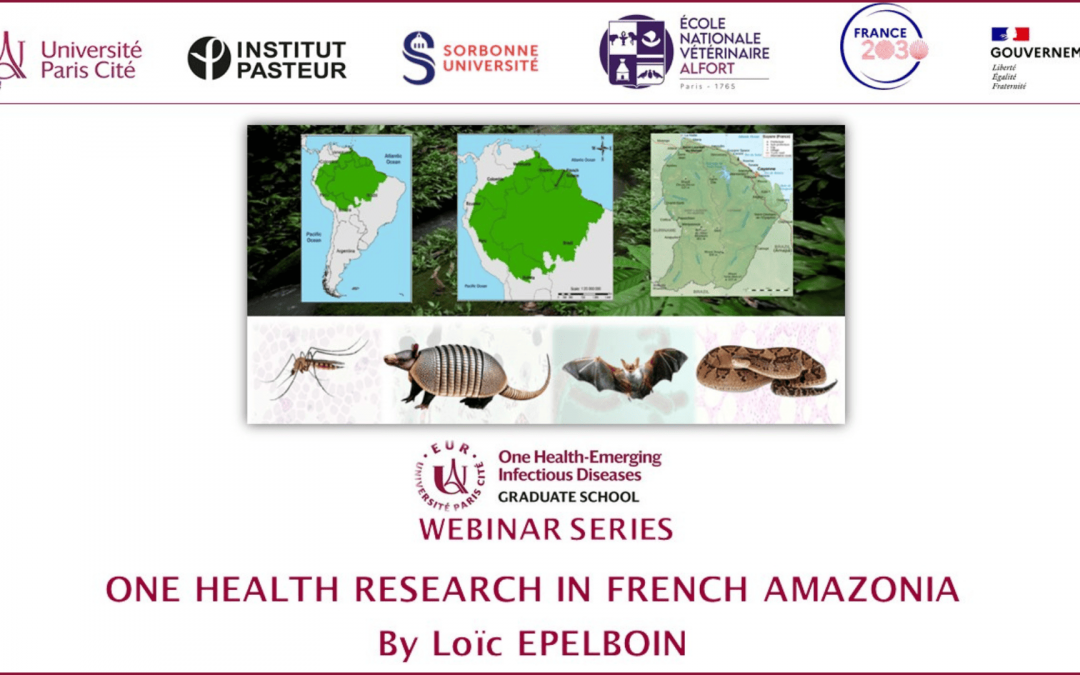
The Amazon, Viruses, and Vampires: what a year of One Health-Emerging Infectious Diseases webinars revealed to the world
Amazonie, virus et vampires : ce qu’un an de webinaires “One Health -Emerging Infectious Diseases” a révélé au monde

Une étude ouvre une nouvelle voie pour prévenir les infections graves du nourrisson
Les infections invasives à pneumocoque, telles que les méningites ou les septicémies, restent une cause importante d'hospitalisation et de complications chez les jeunes enfants. Une étude française, coordonnée par la Dr Inès Fafi et le Pr Naïm Ouldali, du service de...

Rentrée 2026-2027 : les dates à connaître
Les informations relatives à la rentrée 2026-2027, à vos formations ainsi qu'aux services dont vous pouvez bénéficier sont disponibles sur les sites internet des Facultés – Santé, Sciences, Sociétés & Humanités – et de l'Institut de physique du globe de Paris....