

The enteric nervous system, also called the’second brain’, is much more resistant than the first one, in our head. This is what a research team bringing together several French institutions, including Université Paris Cité demonstrated in this research. Results published in the Biophysical Journal (June 2025).
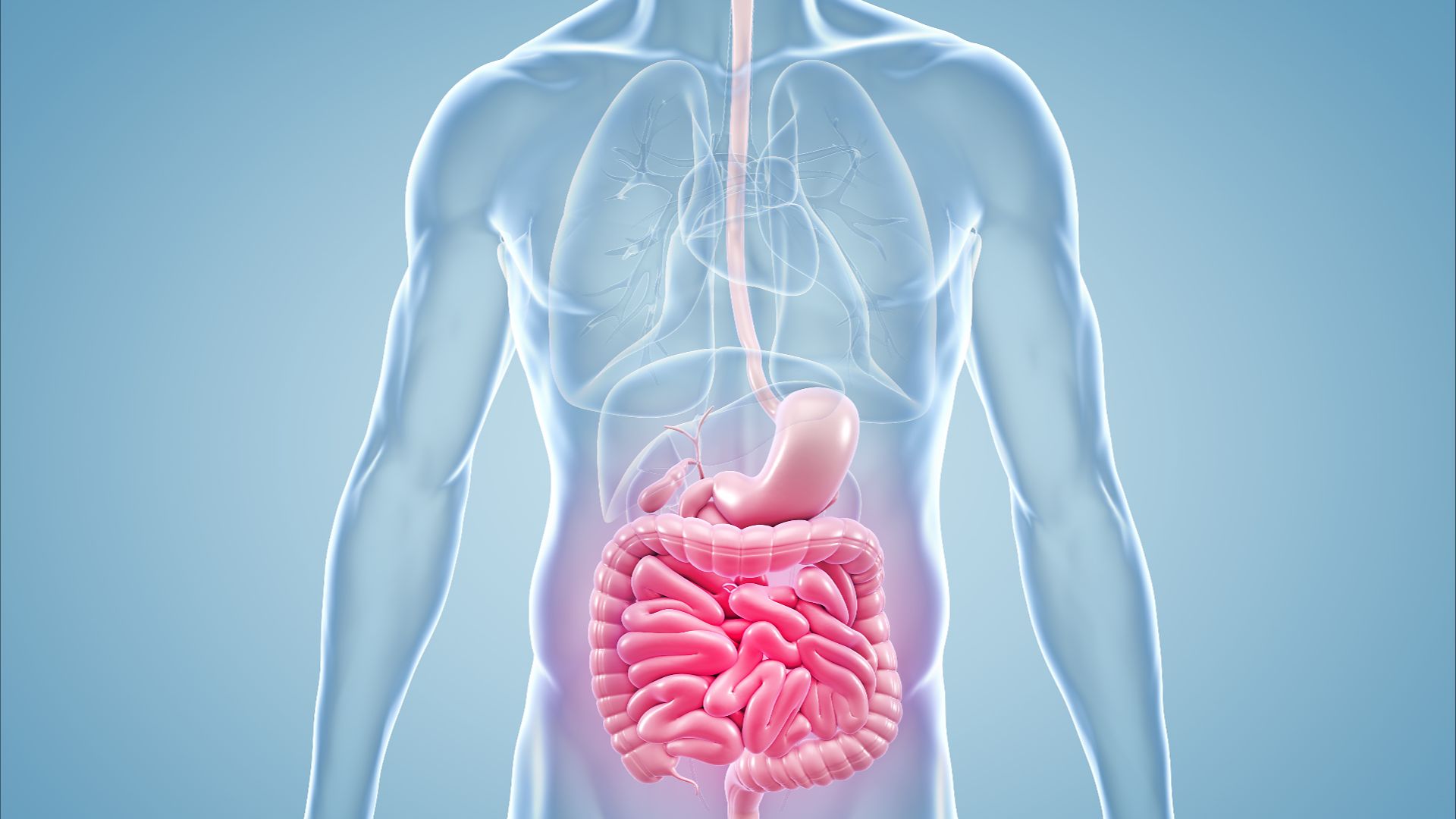
The intestine is the only organ in our body with a quasi-autonomous innervation,the enteric nervous system, commonly named the “second brain”. The brain and the spinal cord are inherentlysoft tissues, protected from mechanical shocks by the skull and the spine. Conversely, the enteric nervous system is put into an elastic matrix that undergoes major deformations with the pressure of the alimentary bolus and the intestine’s contractile waves.
How does this ‘second brain’ resist such mechanical stresses? Researchers from the Laboratoire Matière Systèmes Complexes (MSC – Université Paris Cité/CNRS), the Institut Jacques Monod (Université Paris Cité/CNRS), the Cochin Institute (INSERM/Université Paris Cité/CNRS) and the Institut Jean-Pierre Bourgin (INRAE/AgroParisTech/Université Paris-Saclay), are trying to find an anwser to this question in a paper published in the Biophysical Journal.
Ten times more elastic than the brain
The enteric nervous system is a network of nerve and glial cells, whose bodies form nodes and axon beams form connections. The entire network is located between two muscle layers of the intestinal wall.
First, the scientists isolated the muscle layers of the intestine containing the enteric nervous system, before mapping their elasticity at a micrometric scale using an atomic force microscope. They discovered that the enteric nerve tissue has an elasticity of about 3 to 4 kilopascals, which is ten times more than that of the brain.
“Having used an atomic force microscope many times when I was preparing my thesis, and worked for 10 years on the enteric nervous system, I had to conduct this measurement”, comments Nicolas Chevalier, CNRS research officer at the Laboratoire MSC and first author of the study.
The structural origin of a specific resistance
To understand the origin of this resistance, the scientists used a photonic imaging technique called second-harmonic generation. This technique revealed the presence of a ‘cocoon’ of collagen fibres surrounding the entire nerve network. This cocoon could be the cause of this unique mechanical strength.
The scientists now hypothesise that malleable glial cells could play a role in lymph node creep, which could prevent the pruning of synaptic connections during rapid deformations.
Reference
The enteric nervous system is 10 times stiffer than the brain
Nicolas R. Chevalier, Alexis Paucelle, Thomas Guilbert, Pierre Bourdoncle, Wang Xi
Biophysical Journal, 2025 | DOI: 10.1016/j.bpj.2025.05.010
Translated by MA translation students, Master’s in Language Industry and Specialised Translation, Université Paris Cité, 2026
À lire aussi
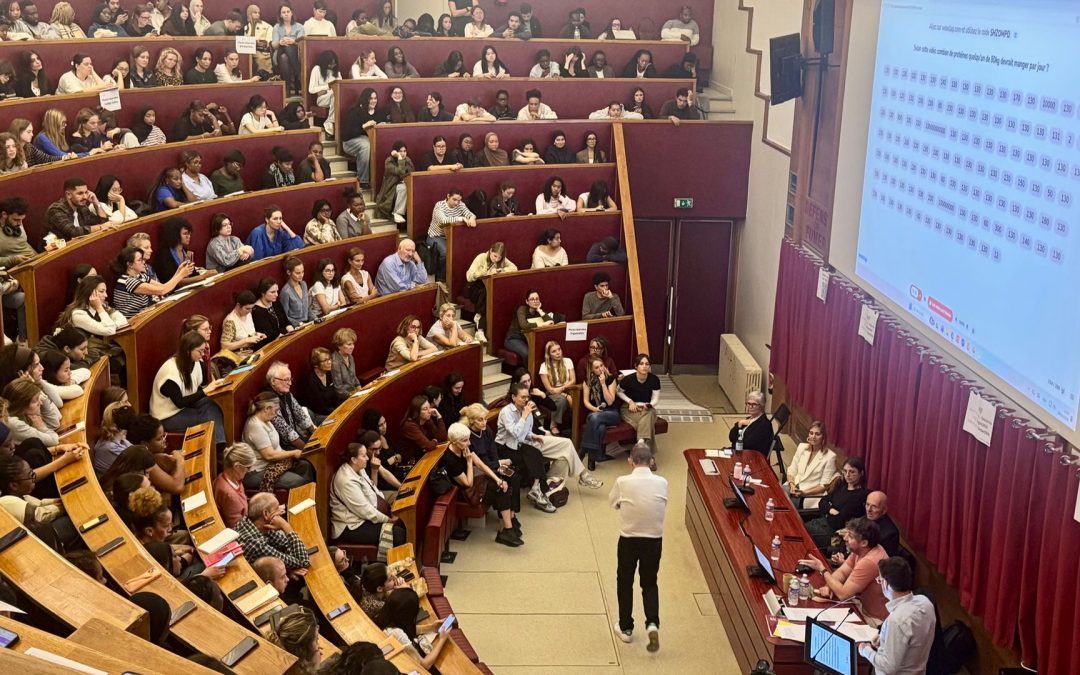
Le Grand Debunk de la Santé : une édition spéciale nutrition au plus près du public

Renforcer l’accès aux soins : la Région Île-de-France investit dans la formation des futurs infirmiers et inaugure un institut rénové au cœur de Paris
Valérie Pécresse, Présidente de la Région Île-de-France et Farida Adlani, Vice-présidente chargée des Solidarités, de la Santé et du Bien vieillir, ont inauguré ce lundi 12 octobre 2026, aux côtés de Nicolas Revel, Directeur général de l’Assistance Publique – Hôpitaux...
read more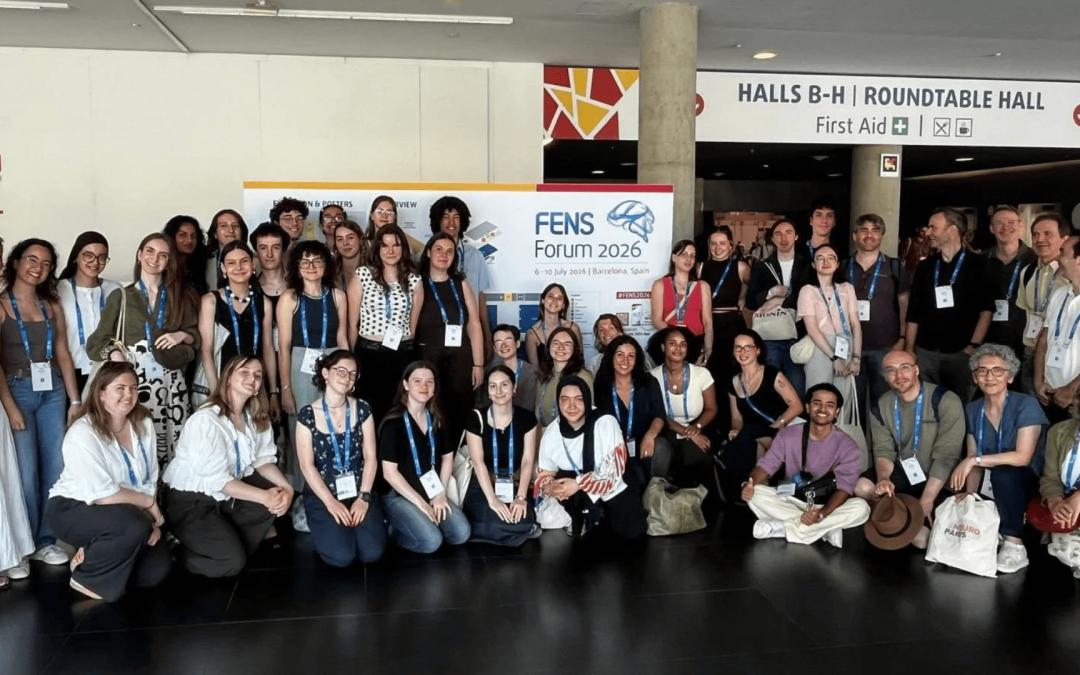
FENS 2026: Graduate School Neuroscience students at the heart of international research
This summer, 25 Master's students from Université Paris Cité's Neuroscience Graduate School attended the FENS (Federation of European Neuroscience Societies) Forum 2026 in Barcelona, Europe's leading neuroscience conference. This was a unique opportunity to immerse...
read more
FENS 2026 : les étudiantes et étudiants de la Graduate School Neuroscience au plus près de la recherche internationale
Cet été, 25 étudiantes et étudiants en master de la Graduate School Neuroscience de l’Université Paris Cité ont participé au FENS (Federation of European Neuroscience Societies) Forum 2026 à Barcelone, le grand rendez-vous européen des neurosciences. Une occasion...
read more