

In response to the climate emergency and in keeping with its “planetary health” commitment, Université Paris Cité is taking a decisive step in its Sustainable Development and Social and Environmental Responsibility strategy. In 2026, the university is setting in motion two complementary initiatives simultaneously: its first comprehensive Greenhouse Gas Emissions Assessment (BEGES) and a climate vulnerability assessment. This dual approach is designed to provide a precise understanding of our carbon footprint in order to reduce it more effectively, while also anticipating the unavoidable impacts of climate change on our campuses.

Assess, then act: the BEGES as a steering tool toward a low-carbon pathway
To reduce its emissions, the university must first understand where they come from. The Greenhouse Gas Emissions Assessment (BEGES) is a regulatory requirement that the university is carrying out using the Bilan Carbone® methodology, the national benchmark developed by the Association for the Low-Carbon Transition (ABC). This process is becoming a real decision-making tool and will lead to a transition plan aimed at embedding decarbonisation across the institution over the long term.
Scheduled for completion in the last quarter of 2026, this assessment will examine three sources of emissions, known as “scopes”:
- Scope 1 — direct emissions: gas combustion and the vehicle fleet.
- Scope 2 — indirect energy-related emissions: electricity and district heating networks.
- Scope 3 — other indirect emissions: procurement, commuting, and digital activities.
The objective is to align with the French National Low-Carbon Strategy and achieve deep decarbonisation by 2050.
Planning ahead to last: the vulnerability assessment in the face of climate hazards
The effects of climate change are already being felt across our campuses, including heatwaves and increasingly intense weather events. While the BEGES helps reduce our footprint, the vulnerability assessment prepares the university to deal with risks that are now unavoidable.
Expected by the end of 2026, this assessment will unfold in four phases:
- Scoping: identifying stakeholders, gathering available data, and defining the scope of analysis.
- Risk mapping:projecting the climate hazards to which our campuses will be exposed by 2030 and 2050.
- Impact analysis:assessing the effects of these risks on our buildings, research activities, and the health of our community.
- Strategic directions:formulating initial pathways to strengthen resilience, which will feed into an adaptation plan in a second phase.
By mobilising its own experts and its internal network, the university is drawing on its in-house strengths to better understand and anticipate campus vulnerabilities, in support of sustainable working and learning conditions for all.
Toward a sustainable climate strategy
The implementation of the BEGES and vulnerability assessments is part of Axis 11 of Université Paris Cité’s Sustainable Development and Social and Environmental Responsibility roadmap, entitled “Reducing our energy consumption.”
Driven by the DD&RSE mission, this initiative is mobilising the entire university community to define a decarbonisation pathway and strengthen the resilience of our campuses in the face of environmental challenges.
À lire aussi
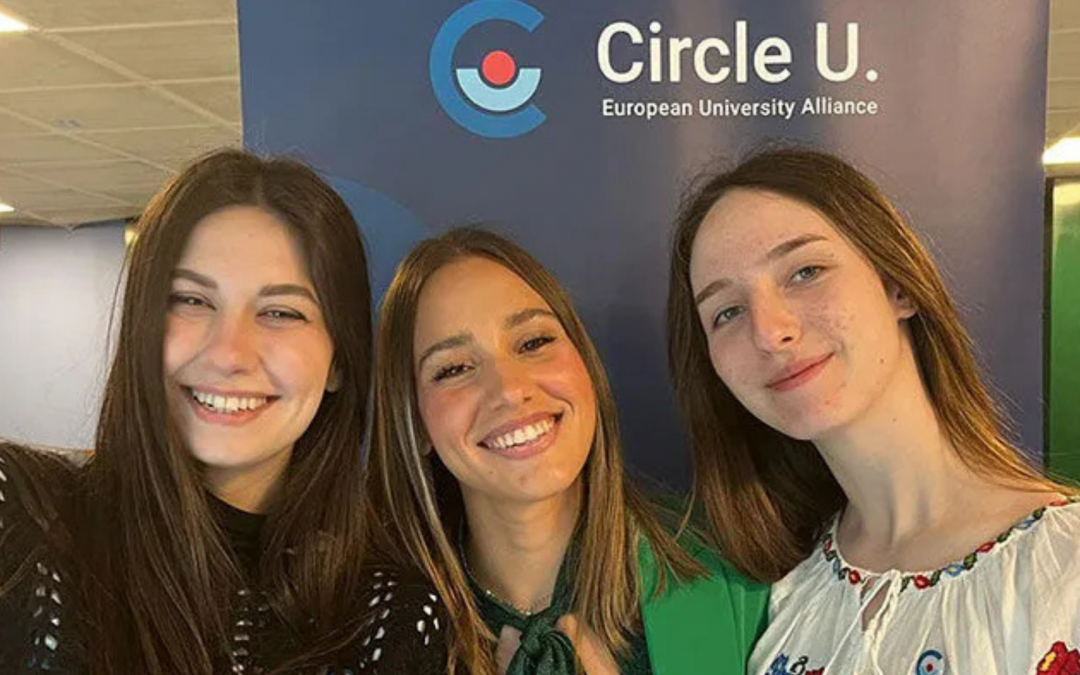
Comment Circle U. m’a aidé à préciser mon projet professionnel
Le parcours de Susanna avec Circle U. a commencé de la manière la plus simple qui soit : par un cours en ligne. Cette première expérience lui a permis de découvrir l'alliance et a marqué le début d'un parcours qui l'a conduite à devenir étudiante ambassadrice, à...
read more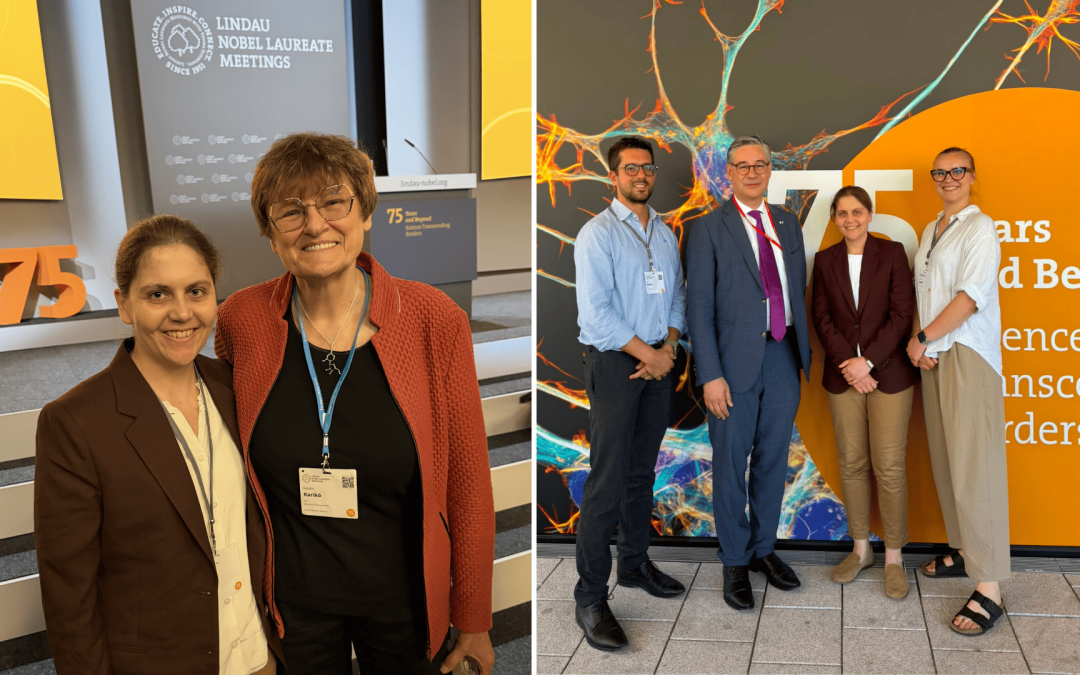
Lindau Nobel Laureate Meetings: an “extraordinary” week at the heart of scientific excellence, as told by two young researchers from UPCité
Thanks to the support of the SMARTS-UP Graduate Schools programme, Federica Namor, a PhD student at the Saint-Louis Research Institute (IRSL – Université Paris Cité/Inserm) and Marie Robert, a young doctor from the Center for Research on Inflammation (CRI – Université...
read more
Lindau Nobel Laureate Meetings : une semaine « hors du commun » au cœur de l’excellence scientifique, racontée par deux jeunes chercheuses d’UPCité
Grâce au soutien du programme SMARTS-UP Graduate Schools, Federica Namor, doctorante à l’Institut de Recherche Saint-Louis (IRSL – Université Paris Cité/Inserm) et Marie Robert, jeune docteure du Centre de Recherche sur l’Inflammation (CRI – Université Paris...
read more
Personnes en situation de handicap et personnels, rencontrez-vous lors du Duoday 2026!
L’Université Paris Cité s’inscrit dans l’opération nationale du DuoDay le 19 novembre prochain, en proposant la formation de duos : personnes en situation de handicap / personnels volontaires, le temps d’une journée de découverte réciproque ! Une autre vision du...
read more