The Conversation – make your research known
The Conversation is a collaborative website where academics can address the general public, with the assistance of journalists. The goal? To make the voice of teachers-researchers heard in the public debate and to shed light on current events through reliable, research-based expertise.

USPC published
Produced by
Totalling more than
articles in 2018
Different authors
Million views in 2018
Why write in The Conversation?
Reach a large audience
The Conversation brings together a large audience (3.7 million readers per month in 2016) who are interested in research. The platform can translate the articles and ensure their international dissemination.
The Conversation is a bridge to other media (La Croix, France Télé Info, Le Monde, Libération, Ouest-France, Le Point, Santé Magazine, Slate, etc.) which can republish the articles that have appeared in full, thus offering a forum and visibility to researchers (35 million readers thanks to republications by other media in 2016).
Make your expertise known
At a time of fake news and criticism of the way the press approaches scientific issues, The Conversation enables researchers to bring reliable expertise on a given subject and visibility to their research work. They can thus be contacted by journalists, associations or companies interested in their skills.
Apart from some very dedicated blogs, scientists themselves are rarely given the opportunity to express themselves in order to share their questions and possible results with as many people as possible. The platform proposed by The Conversation is unique in this sense and strong in its multidisciplinary nature. “Marc-Antoine Fardin, physicist at the CNRS and the University of Paris Diderot – USPC.
Explain your findings
The articles in The Conversation can take several formats:
– Propose articles on subjects related to your current research and likely to interest a wide audience: analysis, deciphering or background dossiers, written in a simple way.
– Write an accessible and short version of a scientific article that you have just published.
– Responding to calls for articles from the site’s journalists – lists of topics that are relevant to the news and on which they require insights from specialists.
Stay in charge of your article
The journalists of The Conversation are “facilitators”: no cuts or changes are made to the article without the author’s consent. Furthermore, media who reprint articles must do so in full and without changing the text.
Ensuring an ethical approach
The mandatory capture of possible conflicts of interest of authors helps to strengthen the ethical approach of scientific engagement in the public debate.
“Passing on what I have learned over a rather long career as a researcher is what motivates my collaboration with The Conversation. I appreciate the format of the contributions, especially since I can express thoughts that sometimes go beyond the strict language of science.” François Vannucci, Professor Emeritus, particle physics researcher, neutrino specialist, Université Paris Diderot – USPC
Read more
Learn French as a foreign language with ‘Décalages culturels’, the podcast from RFI and Université Paris Cité
Born out of a partnership between RFI and Université Paris Cité, and spearheaded by its Pedagogical Innovation Department, the podcast ‘Décalages culturels’ has been running since March as part of the programme ‘8 milliards de voisins’. Having explored the...
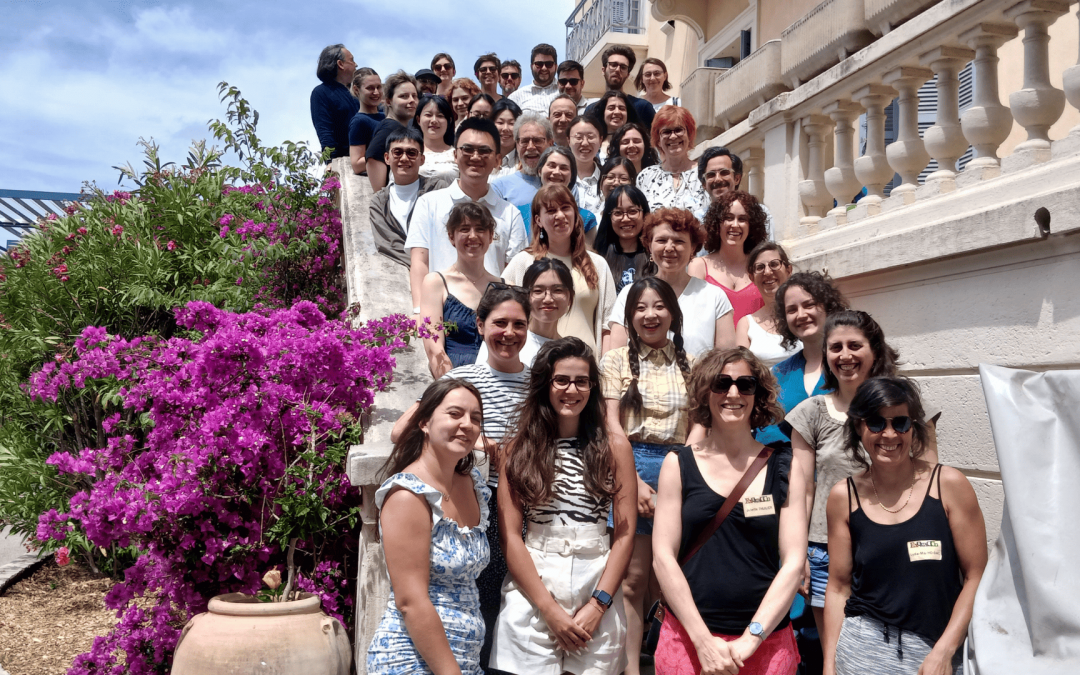
Graduate School Summer Schools: opportunities to learn, collaborate and broaden your horizons
Each year, the Graduate Schools of Université Paris Cité organize their summer schools, offering unique opportunities for learning, scientific exchange and collaboration. Students, PhD candidates and researchers come together to explore a wide range of topics,...
People with disabilities and staff members: meet through DuoDay 2026!
Université Paris Cité is taking part in the national DuoDay initiative on 19 November by creating pairs made up of a person with a disability and a volunteer staff member for a day of mutual discovery. A different perspective on disability The 9th national edition of...