
As part of the Université Paris Cité’s commitment to global engagement, creativity and critical knowledge and research, the Paris Graduate School of East Asian Studies is organizing a series of lectures by international scholars for the 2025-2026 academic year.

The series highlights the wide-ranging intellectual interests and innovations of prominent scholars in the humanities and social sciences, with a focus on the East Asia and flows of ideas, people, institutions, and texts across linguistic and national borders.
Lectures 2025-2026
The lecture series Current Research on East Asia 2025-2026 will take place on one Thursday each month, from 5:00 PM to 6:30 PM.
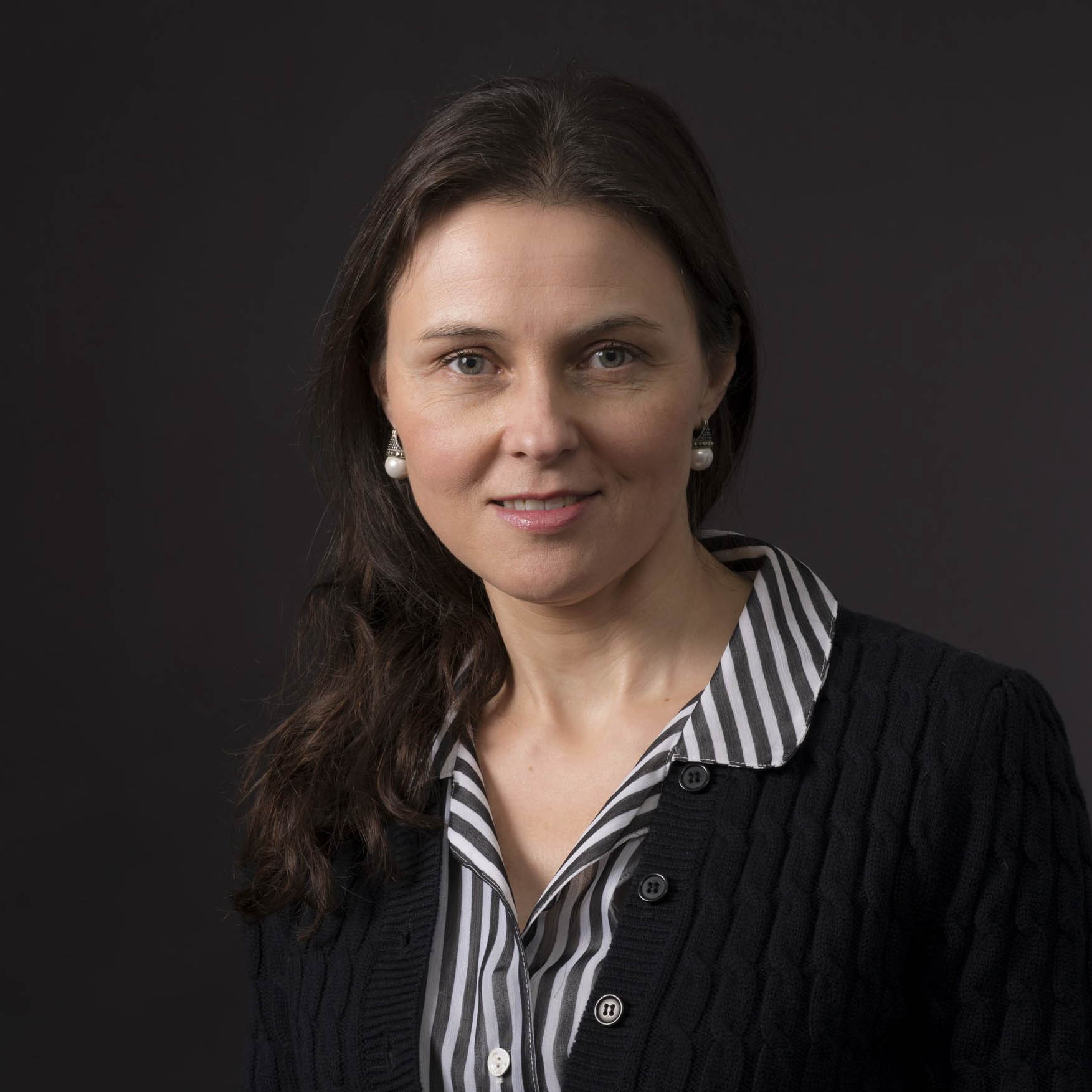
Thursday October 2, 2025
Katarzyna Cwiertka (Leiden University)
From Vision to Texture: Taste and Food Perception in Contemporary Japan
Abstract : Food is among the most potent ambassadors of Japanese culture. Japanese cuisine is celebrated worldwide for various reasons, but the beauty of presentation, in particular, tends to be placed in a spotlight and generally considered transtemporal. In reality, the focus on visuality is a relatively recent product of four independent processes. First, a gradual diffusion of features characteristic of haute cuisine (kaiseki) beyond the realm of high-end restaurants. Second, the proliferation of visual images of food, including colorful print magazines, color television, and, most recently, social media. Third, the omnipresence of food models (shokuhin sanpuru) that line the windows of cafes and restaurants and, finally, the growing visual sophistication of the packaging in which food items are being retailed.
While aesthetics is certainly important in current discourses on food, the predominance of the visual register – often referred to as “ocularcentrism” – overshadows the fact that the appreciation of food in contemporary Japan is a multi-sensory affair, with the emphasis on texture clearly coming to the forefront in recent years. This typically involves ideophones, or words that depict sensory imagery and emotional evaluations of taste. Contemporary Japanese has a large inventory of such expressions that can describe in minute details how food tastes and feels. These words are now omnipresent in advertising and food packaging, on television, in manga and on social media.
This lecture presents preliminary results of the multidisciplinary research project carried out by a team of experts from Leiden University and University of Helsinki, and funded by the Japan Past & Present (https://japanpastandpresent.org/en) a global information hub and repository that promotes research and teaching in the Japanese humanities across disciplinary, temporal, and geographic borders.

Thursday October 23, 2025
Michael Prentice (University of Sheffield)
On the impossibility of studying South Korean corporate life: Insights from anthropology and Asian studies
Abstract : Corporate life is a central part of contemporary South Korean economy, culture and society. Compared to its relative size and prominence, it remains a surprisingly under-researched topic. Superficially this seems like a problem related to access and power. In this talk however, I suggest that circulating Euro-American ideas about South Korean economic life have made corporate life appear to be un-researchable. I structure my talk around ten myths that continue to shape both popular and academic discussions about South Korean corporate life, including topics around hierarchy, the chaebol, and change over time. I draw on my own experience studying South Korean white collar work culture as an anthropologist and insights from broader Asian studies. While these myths have become particularly engrained in both Euro-American and South Korean understanding, I suggest there is still quite a lot to explore, understand, and research about corporate life from different social science and humanities perspectives.
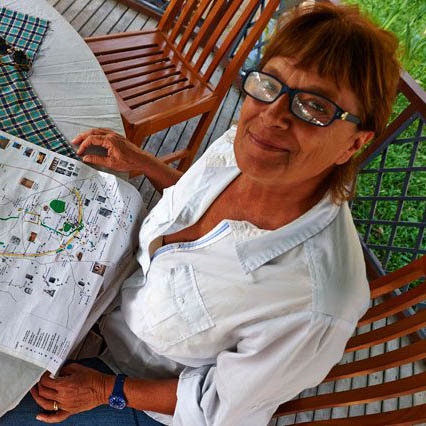
Thursday November 13, 2025
Patrizia Zolese (Lerici Foundation)
Mỹ Sơn archeological site (Vietnam) : temple and power in the making of Champa
Abstract : UNESCO’s inscription of My Son Sanctuary on the list of world heritage in 1999 reflects the site’s importance for our understanding of Champa, a kingdom that extended through central Vietnam over a thousand years up to the 15th century. Located in the hills of the Thu Bon river valley (Da Nang), My Son consists of temple tower complexes built in brick of exquisitely beautiful design and decoration, commissioned by the kings of Champa for the worship of Hindu deities. For the past quarter century, Patrizia Zolese has led an Italy-Vietnam cooperation for archaeological investigation, conservation and training at several temples, notably Groups G and L, at My Son. In this seminar she will share the results of her research into the significance of religious architecture in the political maturation of Champa’s model of kingship.
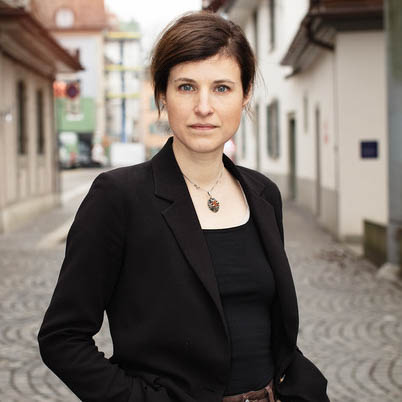
Thursday December 4, 2025
Jessica Imbach (University of Freiburg)
Sovereignty Fantasies: China’s “Industrial Party,” Time-Travel Novels, and the Politics of Speculative Fiction
Abstract : This talk examines the intersection of China’s “Industrial Party” (gongye dang) ideology and time-travel fiction in contemporary Chinese popular culture. The “Industrial Party” refers to a distinctive composition of Chinese netizens who champion technocratic governance and rapid industrialization as pathways to national strength. Sharing similar misogynistic views as the US and European alt-right, they also position themselves as critics of the identity politics of what they term the “Emotional Party” (qinghuai dang). One of their most prominent cultural expressions is speculative time-travel fiction, in which protagonists leverage future knowledge to accelerate China’s development. Through analysis of the web novels Lingao qiming 临高启明 (Morning Star over Lingao, 2009-) and Daguo zhonggong 大国重工 (Great Power Heavy Industry, 2021), I read these works as “sovereignty fantasy” – combining alternative industrial history with (masculinist) fantasies of national empowerment through technological dominance. By examining the relation between literary genres and political visions, I argue that seemingly escapist works of speculative fiction have become important “meta-political” sites for contemporary negotiations of national identity, but also the platforming of anti-feminism.

Thursday January 29, 2026
Martin Gehlmann (Ruhr-University Bochum)
Education, Edification and Examinations. Confucian Learning in Chosŏn Korea
Abstract : The education and examination system of Korea’s Chosŏn dynasty has been variously interpreted both as an exemplary meritocratic mechanism for bureaucratic recruitment and as a symbol of social injustice and oppressive Confucian orthodoxy. By exploring the purposes and functions of educational institutions, the interactions between court and countryside, and the everyday lives of students and teachers, I aim to shed light on the remarkable ideals and the, sometimes familiar, realities of the Chosŏn educational system.

Thursday February 19, 2026
Ann Heirman (Ghent University)
Fleas and bedbugs in Buddhist monasteries: moving from India to China
Abstract : Buddhist texts generally prohibit the killing or harming of all sentient beings. This is certainly the case in vinaya (disciplinary) texts, which contain strict guidelines on the preservation of all animal life. When these vinaya texts were translated into Chinese, they formed the core of Buddhist behavioral codes, influencing both monastic and lay followers. Medieval Chinese vinaya masters, such as Daoxuan 道宣 (596–667), wrote extensive commentaries and accounts, introducing Indian concepts into the Chinese environment. In this paper, we focus on often neglected sentient beings: namely, some of the world’s smallest, but also those most annoying to humans — fleas and bedbugs.
Insects, such as mosquitoes, flies, but also fleas and bedbugs are indeed not the most pleasant animals to human beings, and as such they easily fall victim of human activities trying to eliminate them. Yet, all of these animals are sentient beings that — according to Buddhist principles — should not be harmed or killed. Accepting them as part of life, including monastic life, comes with some consequences, though. Bedding and clothes can be destroyed, bodies can be harmed, and living can become very troubled. On top of these challenges, these creatures are very numerous and hard to avoid.
What this implies for Chinese vinaya masters is the core question of this paper. How do they deal with these realities? How did they translate the Indian concepts? What about the basic principles of Buddhism they hold in the highest esteem ?
Thursday March 12, 2026
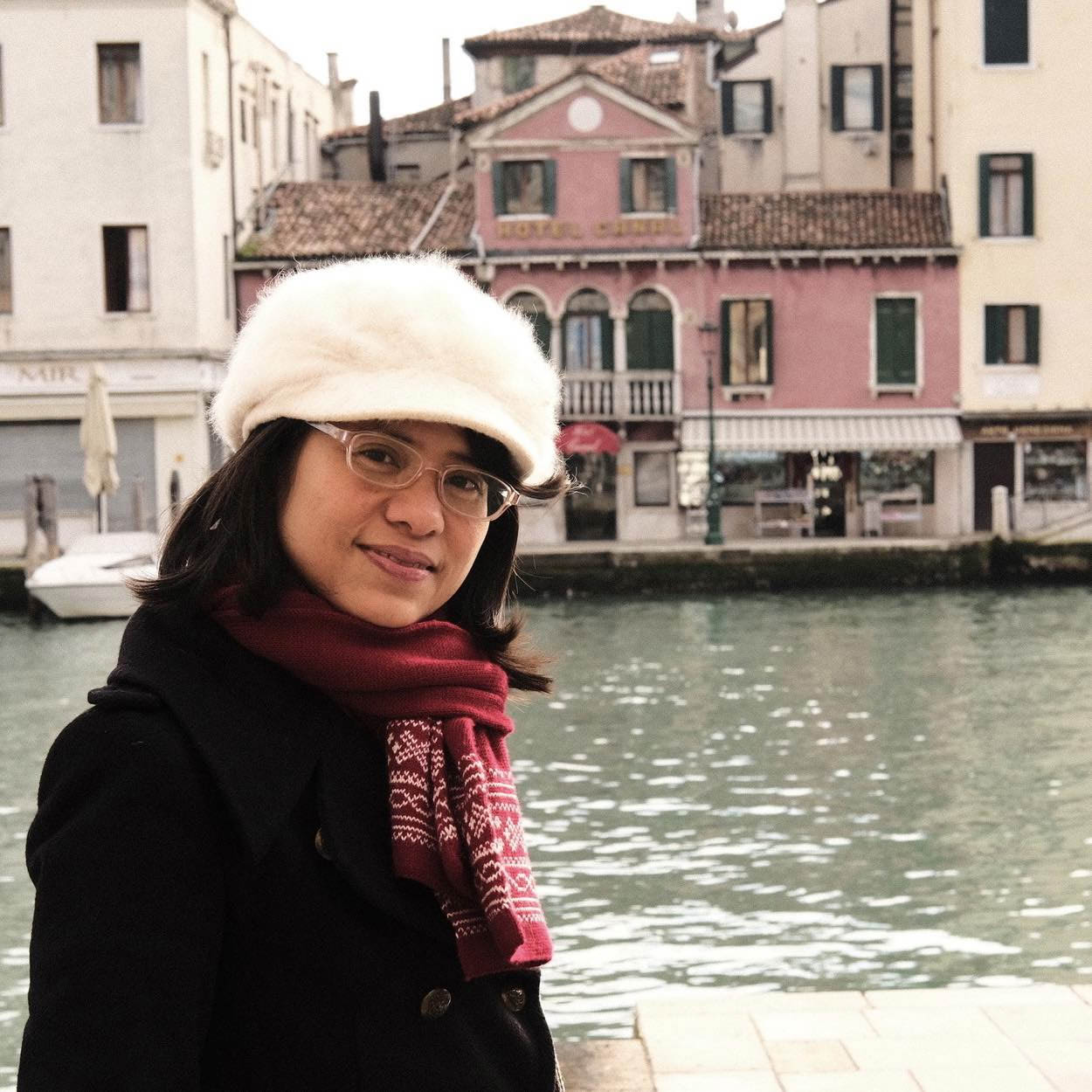
PHAN Thi Huyen Trang (Ca’ Foscari University of Venice)
Rethinking Classifier Systems: Insights from Vietnamese
Abstract : In this talk, I examine how Vietnamese challenges standard assumptions about classifier languages and offers new perspectives on the semantics of noun phrases. Traditionally, classifier systems are defined by the absence of articles and number morphology, yet Vietnamese features both an overt indefinite marker (một) and plural determiners (những, các), complicating this picture. I argue that these features illustrate how classifier languages can accommodate grammaticalized expressions of definiteness and plurality. Building on recent debates between the Kind Approach and the Predicate Approach, I adopt a Kind-based analysis (Chierchia 1998; Dayal 2004, 2025) in which bare nouns denote kinds and extended nominal phrases derive argumenthood through context-sensitive type-shifting. The definite readings of bare classifier-noun constructions, the strict indefiniteness of một-CLF-N phrases, and the definiteness bias of plural CLF-N forms all support this view. Vietnamese thus exemplifies the typological fluidity of classifier systems and their capacity for morphosyntactic innovation. I will situate these patterns within broader cross-linguistic typologies of argument formation and discuss their implications for our understanding of kind reference and bare noun interpretation. The Vietnamese case compels us to reconsider rigid distinctions between classifier and article languages. It demonstrates that classifier systems can incorporate article-like behaviors while retaining core structural properties. Ultimately, I call for a more nuanced and inclusive framework for analyzing noun phrase structure in East and Southeast Asian languages (Jiang 2020).

Thursday April 2, 2026
Laura Moretti (University of Cambridge)
The Power of Touch: Movable Books in Nineteenth-Century Japan
Abstract : In 1809 cultural lion Santō Kyōden and prominent illustrator Utagawa Toyokuni spiced up the world of the Japanese commercial book with what would have most likely appeared as a curious gimmick: a flap. This flimsy sheet of paper pasted on the printed page acted as an invitation for the reader to become an agent of visual and narrative change. We might be tempted to discard it as a vapid variation of turning the page. Yet, the nineteenth-century Japanese print industry was enthralled by the allure of interactivity untethered by this peculiar design and experimented with a variety of movable components in both books and single-sheet prints. This talk interrogates the material qualities of this rich textual tradition to explore the meanings unleashed by their interactive nature. How was the craze for quick changes on the kabuki stage remediated in print? How could revenge be taken in one’s hand, literally? How could space be expanded in one’s hand and to what effects? What did it mean to uncover naked bodies and unfold sensuous pleasures by operating the printed surface? How can these materials be placed in the wider ecology of playthings? By exploring these questions, I hope to provoke wider reflections on the act of reading and on the power of touch in the age of the digital image, while challenging the too-oft invoked association of movable books with children’s literature.
Inscription details
No registration needed, these lectures are open to everyone and available in two formats.
The conferences are only in English.
In person: Léon Vandermeersch Room – 481C, 4th floor, Building C, Grands Moulins – 5 rue Thomas Mann, 75013 Paris
Online: Zoom link
À lire aussi

Afterwork Seminar de la Graduate School of East Asian Studies
Dans le cadre de l’Afterwork seminar de la Graduate School of East Asian Studies, nous accueillerons le jeudi 13 mars de 17h30 à 19h00 trois diplômés de l'UFR LCAO, Ahmed Agne et Cécile Pournin, co-fondateurs de la célèbre maison d’édition de manga Ki-oon, et Julien...
Conférence sur le bouddhisme coréen
À l'occasion de son passage à Paris, Mme LEE Seunghye, conservatrice du musée des Arts LEEUM 리움미술관 de Séoul, donnera une conférence sur le bouddhisme coréen intitulée : "Refiguring Korean Buddhist Women: Three Historical Moments". L'événement est...

Prix Jacqueline Pigeot du meilleur mémoire de master 2024
La lauréate du prix Jacqueline Pigeot 2024 est Marina Valente, pour un mémoire de Master 2 rédigé sous la direction d’Emmanuel Roux et intitulé « L’« étrange maladie » (koejil 怪疾). Etude des stratégies antiépidémiques face au choléra dans la Corée du Chosŏn,...
Cycle de conférences « Axe travail » Populations Japonaises
Prochaine conférence : Jun LIU (Université Paris Cité), L’emploi des jeunes en Chine : la crise et l’espoir - Vendredi 5 avril 2024 - Voir l'affiche Le groupe de recherche Populations Japonaises organise un cycle de conférences sur le thème "Axe travail"....