

The latest Shanghai Ranking, or Academic Ranking of World Universities, was unveiled on Saturday 15 August 2026. By climbing to 57th place, UPCité continues to secure its place in the global top 100, as it has done every year since its foundation.
With its 113 research units and scientific output accounting for 10% of scientific publications in France, the institution demonstrates its ability to conduct research at the highest international level to address major contemporary scientific challenges.
“After six years of existence, UPCité’s continuous progression in an increasingly competitive international academic landscape reinforces our trajectory of excellence, validates the robustness of our interdisciplinary model, and highlights the strength of our partnerships. This success is the result of the commitment of the entire UPCité research ecosystem: its three Faculties—Health, Sciences, Societies & Humanities—the IPGP, the Institut Pasteur, our joint research organisations (Inserm, CNRS, Inria, IRD, CEA, INRAE), and our partner universities in the Paris region. It reflects the impact of the research conducted by our teacher-researchers, researchers, and doctoral candidates, and is made possible by the indispensable daily support of research support personnel and all professional services across the institution.
This year, part of the improvement is also due to an analysis carried out in collaboration with Sorbonne Université, Université Paris-Saclay and the Vice-Chancellery of the Universities of Paris, aimed at improving the recognition of historical prizes and honours that had previously been overlooked following the reorganisation of Paris’s universities, thereby restoring the scientific heritage of our institutions.
Finally, it is important to note that this ranking is the result of research investment policies implemented since the Grand Emprunt (now known as France 2030) – foremost among which are the IdEx and ISITE initiatives for excellence – which have supported the autonomy, restructuring and differentiation of research-intensive universities. Whilst investment in higher education and research now appears to be under threat (the weakening of the LPR, the failure to partially compensate for the CAS pension cut, etc.), financial support for research and universities is more essential than ever to sustain this drive towards excellence in research and innovation, and to preserve France’s sovereignty and its international influence,” explains Édouard Kaminski, President of Université Paris Cité.
Whilst welcoming this recognition, it is worth noting that the Shanghai Ranking remains a partial indicator: it does not assess the quality of degree programmes or graduate employability, nor does it provide a broader measure of universities’ ability to draw on all fields of knowledge – particularly the humanities and social sciences – to inform public debate and address major societal challenges.
À lire aussi

Fête de la Science 2026 : les « Saveurs savantes » s’invitent à l’Université Paris Cité
Goûter pour comprendre. Expérimenter pour apprendre. Découvrir pour savoir. Du 1er au 12 octobre 2026, l’Université Paris Cité vous invite à explorer les liens entre science, goût et alimentation ! Découvrez le programme de la Fête de la science à l'université Une...
read more
Amanda Silva Brun co-signe un article dans Science pour renforcer l’impact de la recherche européenne
Dans un article de positionnement publié le 24 septembre 2026 dans la revue internationale Science, Amanda Silva Brun, directrice de recherche au CNRS au laboratoire NABI (Université Paris Cité/CNRS/INSERM), et le réseau européen INPACT! formulent des recommandations...
read more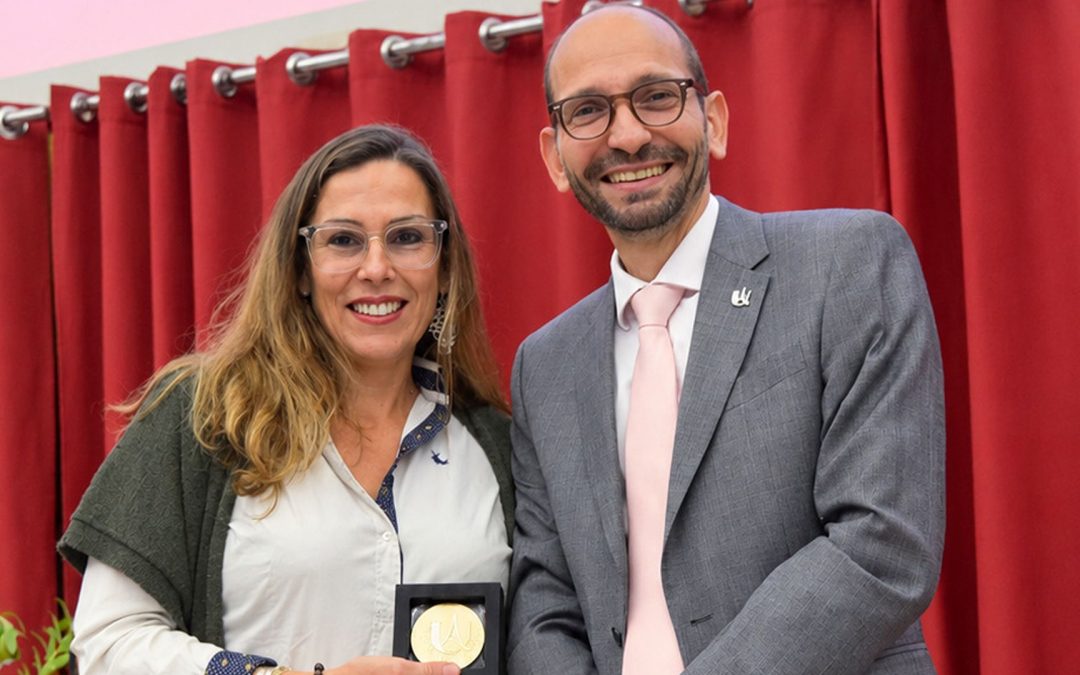
Valérie Robin Azevedo, lauréate 2026 de la Médaille de l’engagement de l’Université Paris Cité
Anthropologue spécialiste du Pérou, Valérie Robin Azevedo est Professeure des Universités à l’Université Paris Cité depuis 2014. Membre de l’unité de recherche Migrations et Sociétés (URMIS), elle enseigne dans les départements de sciences sociales des UFR de...
read more
Fête de la Science 2026 : l’Université Paris Cité ouvre ses portes pour célébrer la recherche !
Du 1er au 12 octobre, l’Université Paris Cité célèbre la Fête de la Science ! À travers une programmation riche, festive et accessible à toutes et à tous, curieuses et curieux sont invités à rencontrer les scientifiques pour explorer la recherche autrement, au fil...
read more