

As part of her doctoral research, Tamara Uspenskikh, a PhD candidate affiliated with the Graduate School Sustainability, Organisations, Institutions at the university, analyses the economic diversification strategies of the Gulf Cooperation Council (GCC) states in response to their dependence on hydrocarbons. Between the imperatives of economic transition and instability in the Middle East, the ability of these states to continue transforming their development models is being increasingly questioned, in a context where regional tensions surrounding Iran further heighten uncertainty.
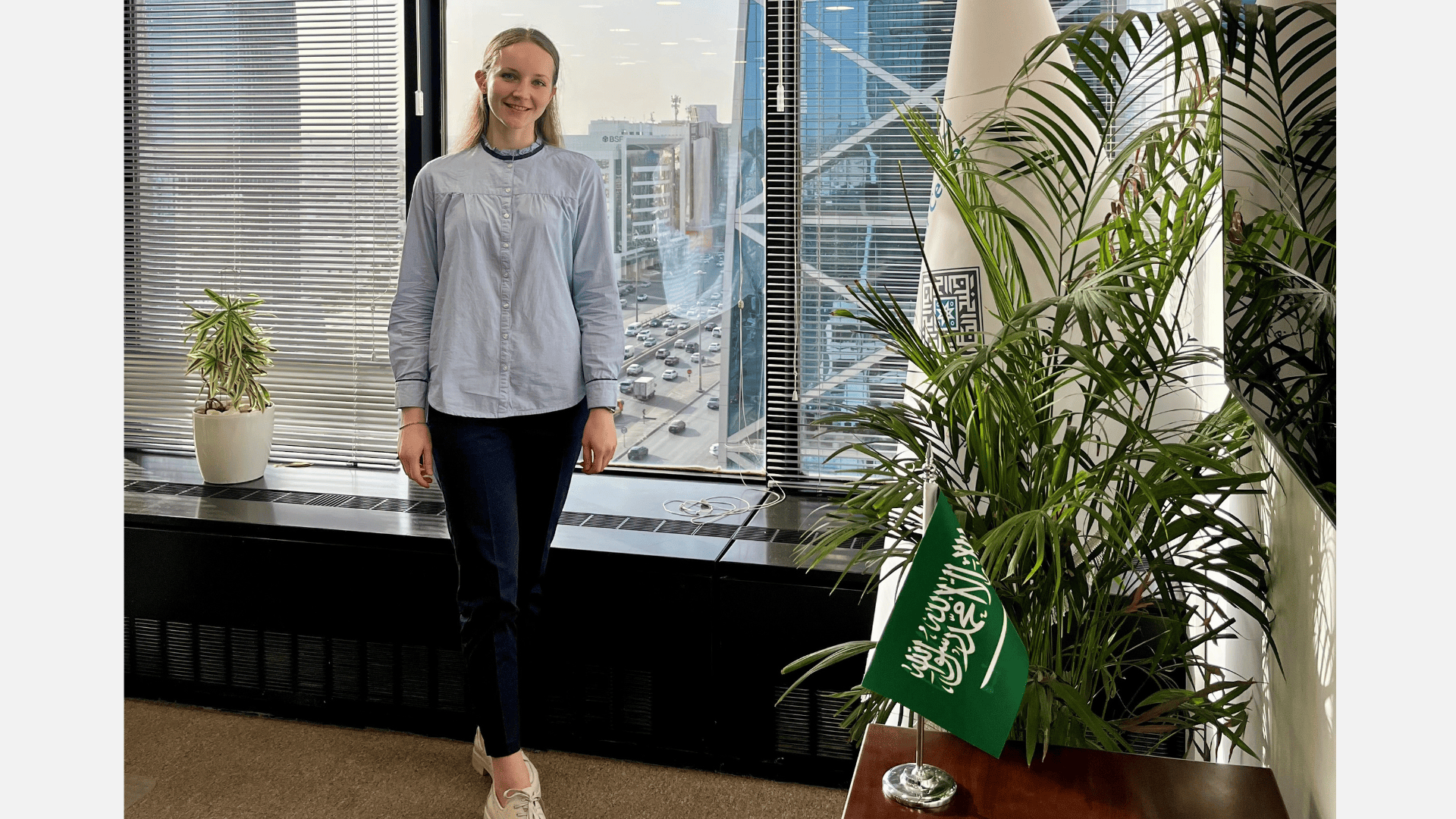
Tamara Uspenskikh at the premises of the Gulf Research Center in Riyadh, Saudi Arabia.
Could you briefly present your research topic?
My doctoral research focuses on the Gulf Cooperation Council (GCC), a regional organization in the Middle East that brings together six states of the Arabian Peninsula: Saudi Arabia, Bahrain, the United Arab Emirates (UAE), Kuwait, Oman, and Qatar. My work examines the capacity of this regional grouping to act as a collective actor on the international stage, in light of its internal dynamics and external relations.
Economic and energy dimensions play a central role in my research. On the one hand, the six GCC states occupy a central position in international hydrocarbon markets. On the other hand, aware of their dependence on oil, these countries have, since the late 2000s and 2010s, launched ambitious economic diversification strategies through so-called “Vision” programmes. These efforts rely on substantial financial resources, as well as a genuine desire to reduce dependence, supported by economic, political, and environmental motivations.
I conduct my research within the Maurice Hauriou Center for Public Law and Political Science Research at Université Paris Cité.
Why has the question of “moving away from oil dependence” become central today for GCC states?
In reality, this issue has long been a concern for GCC states. Early reflections on their dependence on a single source of revenue date back to the 1960s and 1970s. The first economic reforms were also implemented as early as the end of the 20th century, initially in Bahrain, which became a regional hub for trade and finance in the 1970s and 1980s, and later in the 1990s in the United Arab Emirates and Qatar.
The recently launched Vision strategies build on some of these earlier reforms. The main difference lies in the scale of the programmes adopted. These strategies aim at the comprehensive transformation of all six states’ economic models in terms of diversification and energy transition. The adoption of these strategies between 2008 and the 2010s resulted from several converging factors. The oil price boom between 2003 and 2008 enabled the accumulation of the financial resources necessary for such transformations. Conversely, the 2008 financial crisis and the decline in oil prices highlighted the vulnerability of hydrocarbon-dependent economies. In addition, demographic growth and the large influx of young people into the labour market revealed the limits of the rentier model based on public-sector employment, making economic diversification and job creation key priorities. Finally, these strategies are part of the broader global environmental transition.
To address these challenges, Vision strategies focus in particular on developing the private sector, investing in technological innovation, and expanding the tourism industry in order to create new engines of growth. These efforts also include hosting major international events, including sporting ones, as well as building megaprojects such as futuristic cities and tourist complexes.
To what extent does the current geopolitical context influence the energy trajectories of producing countries?
The current geopolitical context influences the energy trajectories of the six producing countries, without fundamentally calling their long-term strategies into question. These diversification and energy transition strategies rely heavily on oil and gas revenues, which finance the investments needed to transform their economies.
In this context, the crisis surrounding Iran has a multi-layered impact. On the one hand, regional escalation generates a reputational cost by affecting the image of stability and security that GCC states seek to project, which can reduce their economic attractiveness and slow down foreign investment in key sectors such as tourism. Moreover, regional tensions fuel uncertainty in energy markets, contributing to sustained high hydrocarbon prices.
In the short term, this context may reinforce reliance on hydrocarbons in order to generate the revenues needed to address immediate economic challenges. At the same time, the transition away from excessive hydrocarbon dependence is understood as a strategic imperative, a point further underscored by the crisis surrounding Iran and disruptions to export supply chains.
Ultimately, the current situation mainly affects the pace of the transition, encouraging GCC states to prioritise increased short-term exploitation of their resources, without calling into question their long-term objective of reducing oil dependence.
Your work also draws on field experience through an international doctoral mobility grant funded by the SMARTS-UP programme. How did this immersion help you better understand the region’s dynamics?
This grant allowed me to carry out a research stay at the Gulf Research Center, an important think tank based in Riyadh, Saudi Arabia. For two months, I had the opportunity to work daily alongside researchers at the institution and to enrich my thinking through stimulating discussions.
This immersive experience was particularly valuable: it enabled me to confront field realities, deepen my understanding of regional policies, and integrate these new perspectives into my research.
How is your research being promoted within the Graduate School Sustainability, Organizations, Institutions and beyond?
Upon my return from Riyadh, I presented the economic diversification policies of GCC countries during a seminar of Atelier 2 at LADYSS, to master’s students of the Graduate School.
Petia Koleva, head of the Graduate School Sustainability, Organisations, Institutions, also invited me to collaborate on the development of two proposals: one for a conference session and the other for a project dedicated to contemporary issues in territorial transitions and intended for the International and Interdisciplinary College of Territorial Sciences (CIST).
Beyond the Graduate School, my immersion in the research center has provided valuable opportunities to showcase my work, including several contributions and prospects for publication.
Read more
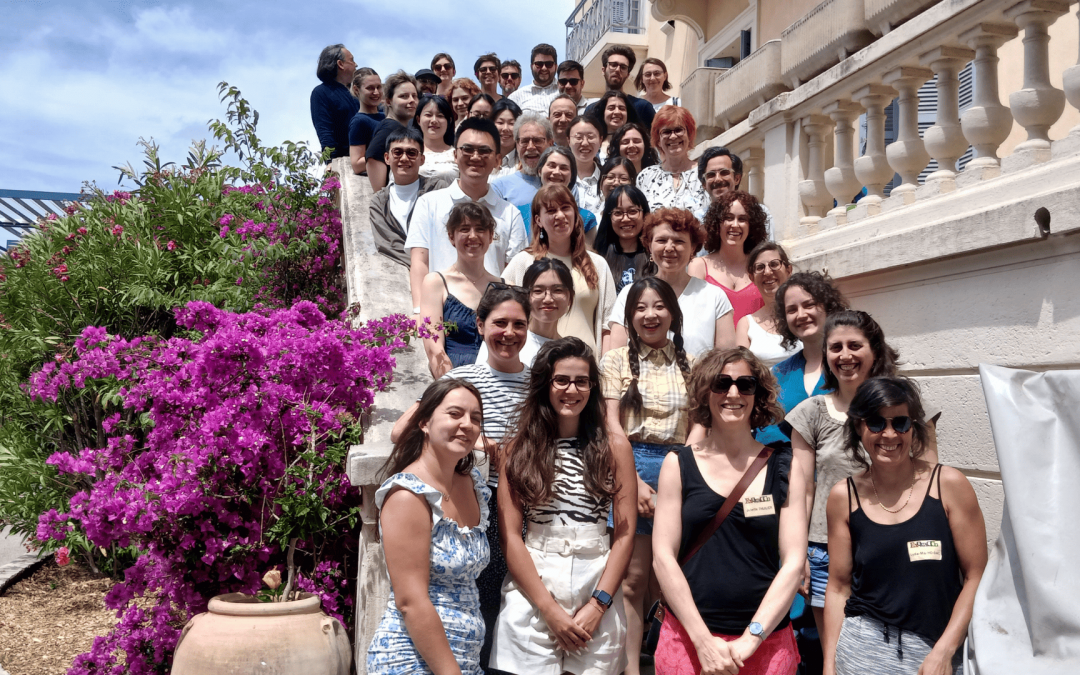
Graduate School Summer Schools: opportunities to learn, collaborate and broaden your horizons
Each year, the Graduate Schools of Université Paris Cité organize their summer schools, offering unique opportunities for learning, scientific exchange and collaboration. Students, PhD candidates and researchers come together to explore a wide range of topics,...
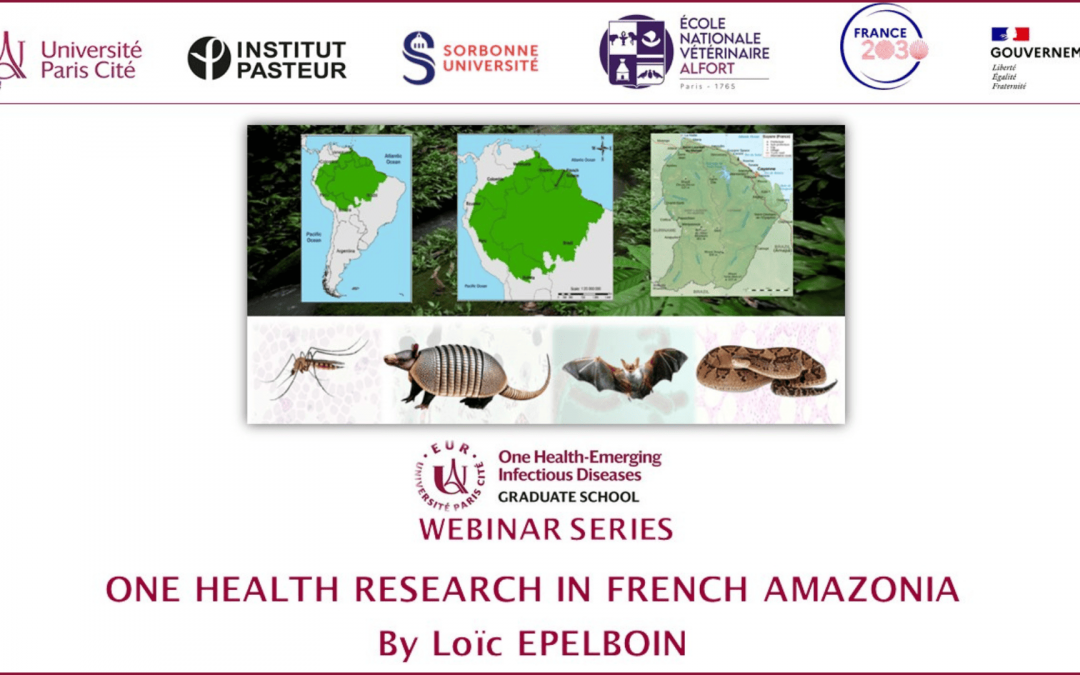
The Amazon, Viruses, and Vampires: what a year of One Health-Emerging Infectious Diseases webinars revealed to the world
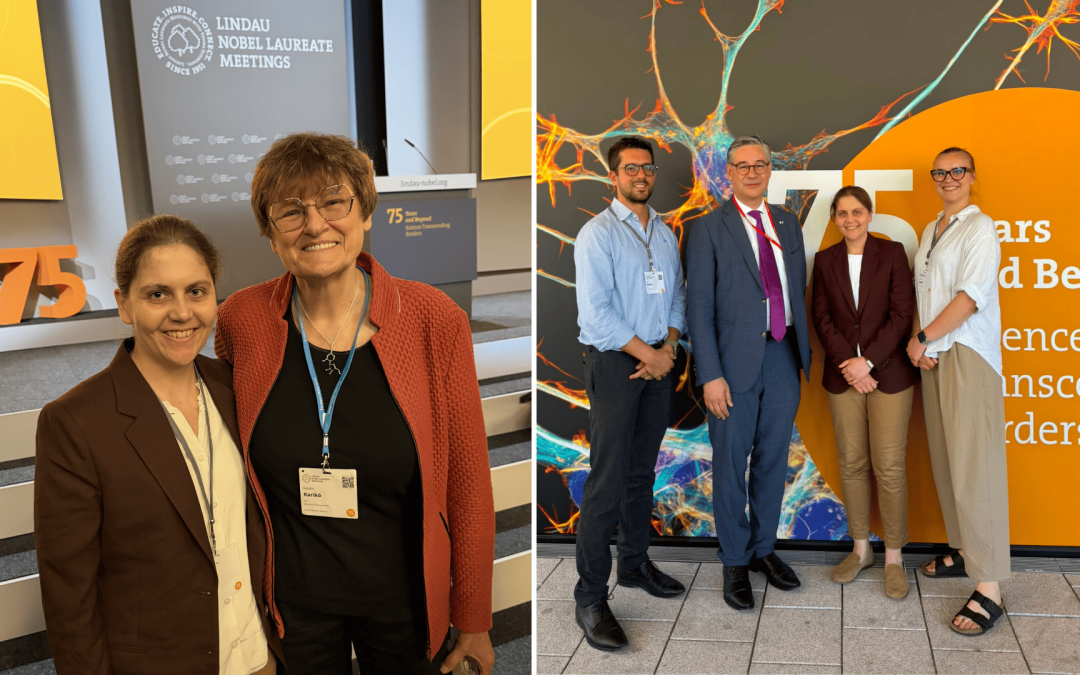
Lindau Nobel Laureate Meetings: an “extraordinary” week at the heart of scientific excellence, as told by two young researchers from UPCité
Thanks to the support of the SMARTS-UP Graduate Schools programme, Federica Namor, a PhD student at the Saint-Louis Research Institute (IRSL – Université Paris Cité/Inserm) and Marie Robert, a young doctor from the Center for Research on Inflammation (CRI – Université...
Antimicrobial resistance: doctoral researcher Yaëlle Wormser explores a new lead to speed up tuberculosis research
Antibiotic resistance represents one of the greatest health threats of our time. Through her research, Yaëlle Wormser, a doctoral researcher within the university's Antimicrobial Resistance Graduate School and winner of the "Ma thèse en 180 secondes" competition,...