

The Graduate School Sustainability, Organisations & Institutions offered the three winners of its 2025 Best Thesis Award the opportunity to take part in the international Desertif’actions Summit, “Territorial Resilience in the Face of Crises,” held in Djerba. The aim was to develop an advocacy statement based on concrete solutions in order to influence the decisions of the United Nations COP17 on combating desertification. Luna Colovray, awardee of the 3rd Prize for Best Thesis and now a PhD candidate in geography, reflects on this defining experience in her academic journey within the Graduate School at Université Paris Cité.
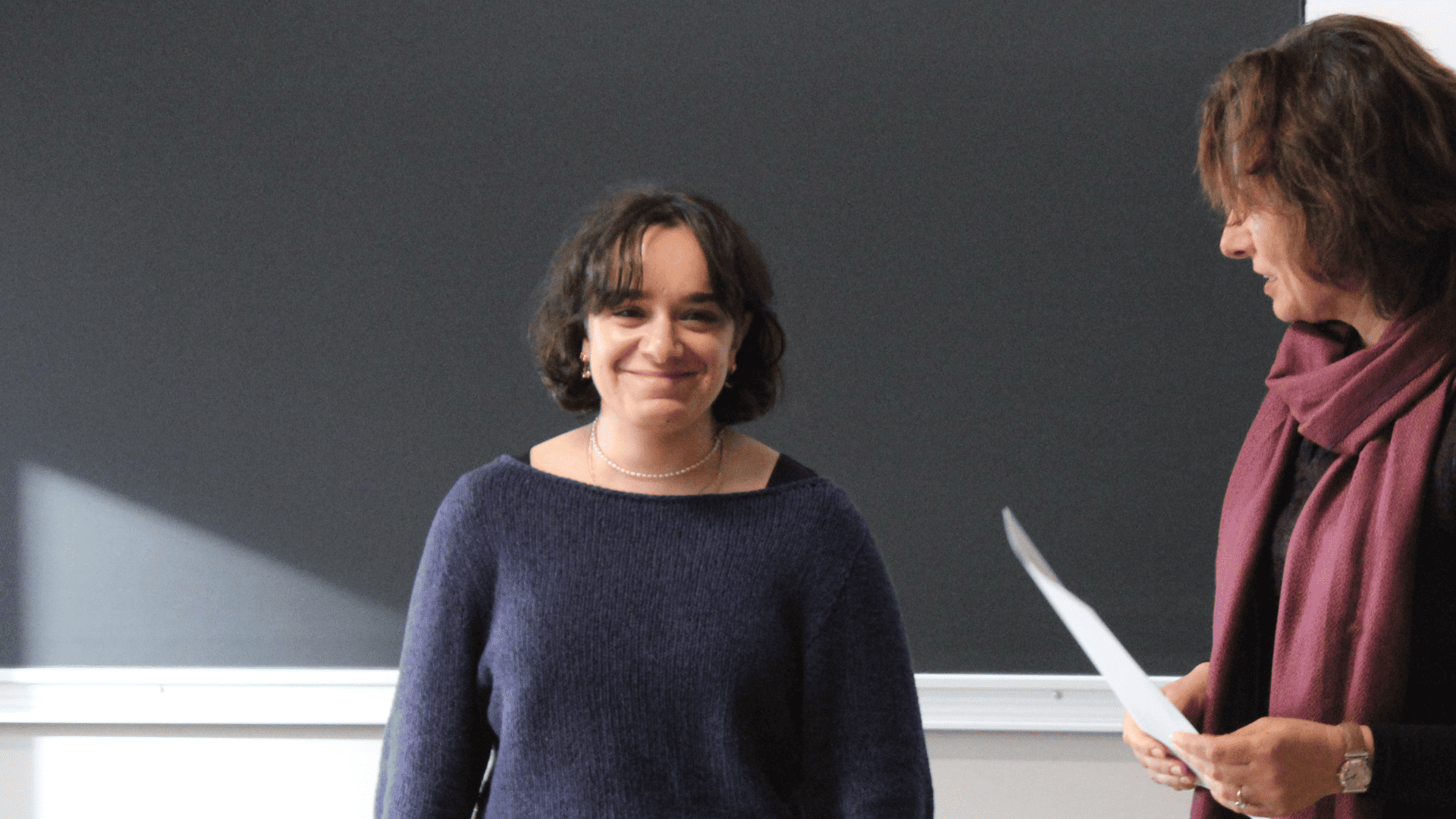
Luna Colovray, PhD candidate in geography and awardee of the 3rd Prize for Best Thesis of the Graduate School Sustainability, Organisations & Institutions.
How did this first experience at an international summit unfold for you?
These three days at the summit were very intense. I took part in round tables and thematic workshops led by stakeholders from civil society, the research community, associations, private and public institutions, and local authorities.
I had previously attended conferences and summits in France, where I mostly met Europeans. This was the first time I participated in an international event of this scale, and being in Africa allowed me to meet new people and confront different realities.
Can you tell us about an exchange or a moment that particularly stood out to you?
I spoke with the organizer of a round table about the presence of various economic stakeholders. They take part in the summit to promote their tools within a profitability-driven approach, which can sometimes conflict with sustainability objectives. Nevertheless, these actors remain essential to developing solutions, and it is impossible to do without them.
This summit allowed me to move beyond theory, discover field realities, and understand the need to take economic constraints into account.
What did this experience bring you from a research perspective?
This experience led me to question my research methodology as part of my PhD thesis on land inheritance and its impacts.
I learned a great deal, particularly about land-related realities in Africa. For example, in Cameroon, large plots of land are often inherited and subdivided, making it very difficult to implement collective strategies to combat desertification.
I met many people from diverse backgrounds and discovered organizations and institutions that were highly interested in my research topic. It made me realize that land issues are far broader than I had imagined.
How did your Graduate School experience prepare you for this kind of international event?
The Master’s in Economic Analysis and Policy within the Graduate School Sustainability, Organisations & Institutions strengthened my desire to pursue research. It provided me with a supportive and motivating environment where we were introduced to both supervised and independent research.
The program also gave me the opportunity to attend lunch seminars and meet students from all over the world.
Which skills acquired during your Master’s program proved useful during the summit?
I discovered an entire dimension of economics and worked with researchers whose approaches are interdisciplinary, not solely focused on mathematics and markets.
I also developed essential skills such as speaking in English and presenting my research to peers while being regarded as a researcher.
Read more
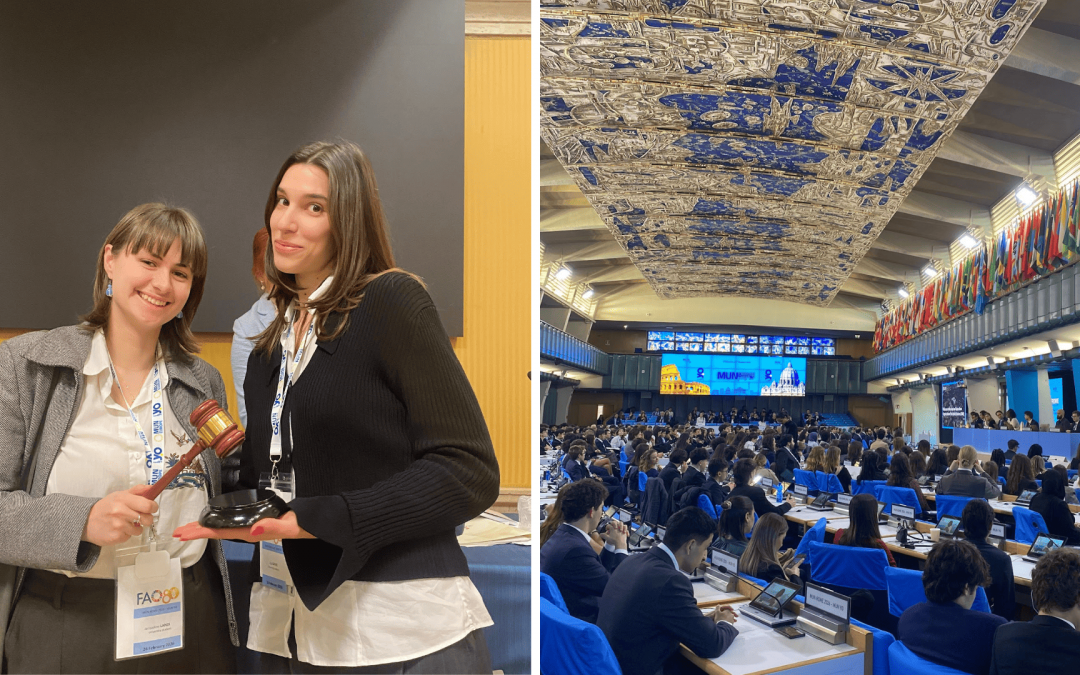
Two EURIP students share their experience as part of the Circle U. delegation at the Model United Nations (MUN) in Rome
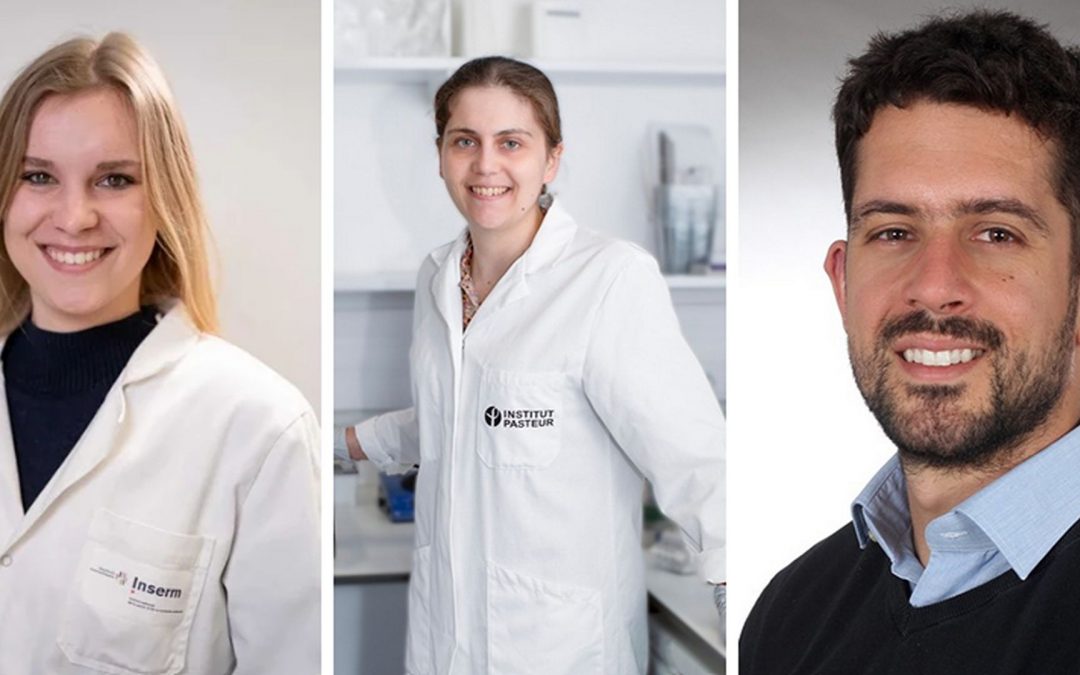
Université Paris Cité in the spotlight for the 75th edition of the Lindau Nobel Laureate Meetings
For the 2026 edition, three young talents from Université Paris Cité have been selected to take part in the prestigious Lindau Nobel Laureate Meetings in Lindau, Germany. A unique opportunity for Luca Ferrini, as well as for Federica Namor and Marie Robert, the latter...

One Health Summit: the Graduate School 1H-EID at the heart of global health issues
Launch of the Graduate School Cardiovascular and Blood Sciences (CVBS): An Integrated Approach to Circulatory Health
The Graduate School Cardiovascular Sciences is expanding its scope by integrating hematology and becoming the Graduate School Cardiovascular & Blood Sciences (CVBS), dedicated to cardiovascular sciences and blood. Through this evolution, Université Paris Cité...